Introduction
Learning How to Crate Train a Puppy Fast: Nighttime and Separation Anxiety Tips can make your first weeks with a new puppy much easier. A crate can provide a safe, comfortable space while supporting house training, routines, and independence.
However, successful crate training should never rely on fear or forcing your puppy inside. The fastest approach is usually the most patient and positive one. When your puppy learns that the crate predicts safety, rest, treats, and comfort, progress often happens naturally.
This guide explains How to Crate Train a Puppy Fast: Nighttime and Separation Anxiety Tips using practical methods that new puppy owners can follow at home. You will also learn how to handle crying, nighttime toilet breaks, and early signs of distress.
For broader guidance on raising a confident young dog, explore our Puppy Training Pillar, where you can find more helpful training resources.
What Is the Fastest Way to Crate Train a Puppy?
The fastest way to crate train a puppy is to create positive associations and increase crate time gradually. Start with short, relaxed sessions rather than closing the door immediately.
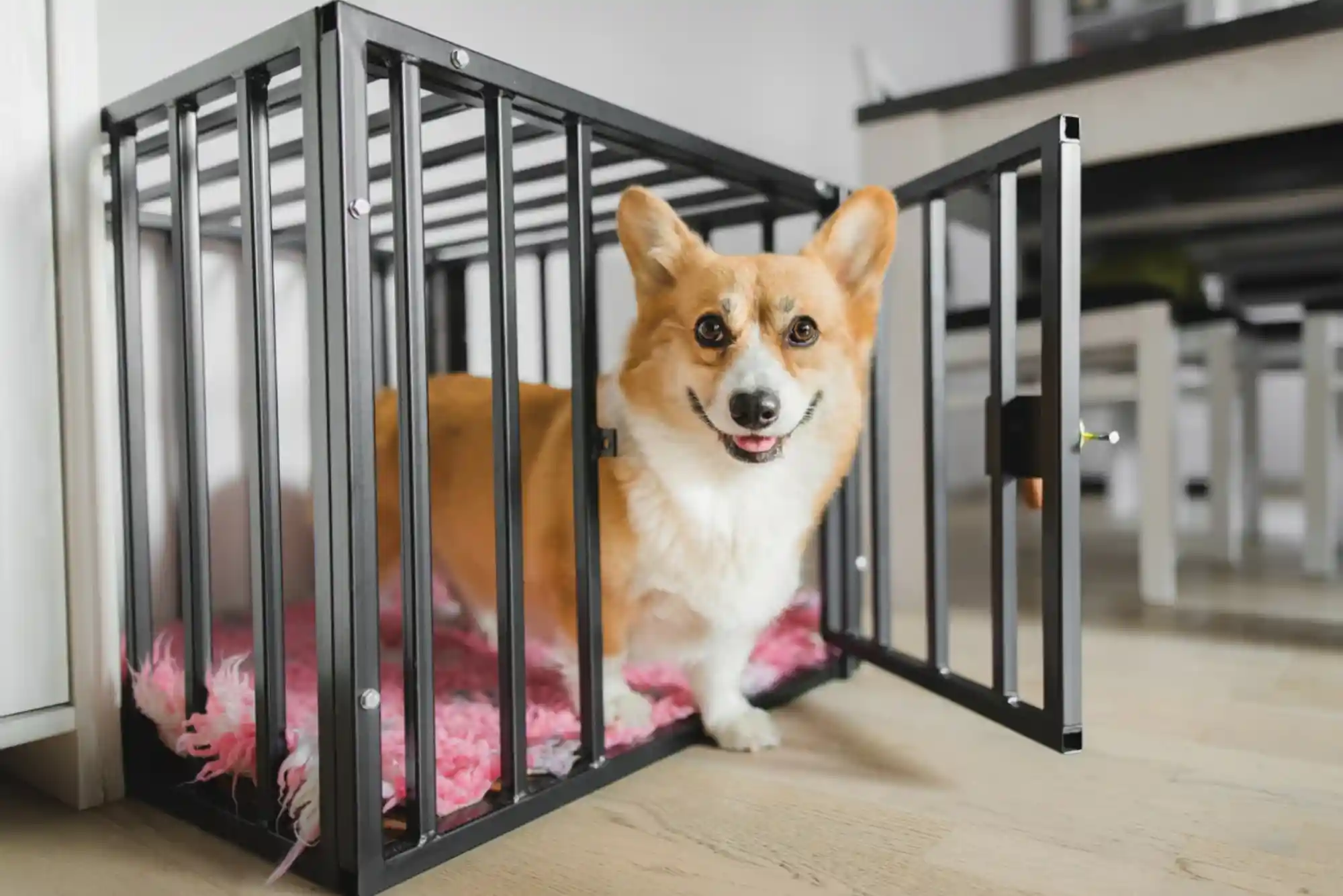
Place the crate in a calm area where your puppy still feels included. Add comfortable bedding if your puppy does not chew or destroy it. Then place treats or a favourite toy near the entrance.

Allow your puppy to investigate voluntarily. Never push your puppy into the crate.
Once your puppy enters comfortably, reward calm behaviour. Repeat this process several times during the day. Gradually increase the amount of time your puppy spends inside.
Consistency matters more than speed. A puppy that feels safe may adapt quickly, while a frightened puppy may need additional time.
How to Crate Train a Puppy Fast: Start With Positive Associations
A crate should become a place your puppy chooses to enter. Therefore, the first experiences matter greatly.
Make the Crate Feel Safe and Comfortable
Choose a crate that allows your puppy to stand, turn around, and lie down comfortably. Avoid choosing an excessively large crate for house-training purposes.
Place the crate somewhere your puppy can hear normal household activity. During the early stages, isolation can make crate training more difficult.
You can place safe toys inside the crate. Food rewards can also help create positive associations.
Leave the door open at first. Let your puppy explore without pressure.
Feed Meals Near the Crate
Food can help your puppy build confidence around the crate. Begin by placing the food bowl near the entrance.
Over several meals, gradually move the bowl farther inside. Your puppy should enter willingly.
Eventually, your puppy may feel comfortable eating with the door briefly closed. Open it again before your puppy becomes distressed.
This gradual process teaches your puppy that the crate is not a trap.
Reward Calm Behaviour
Reward your puppy for entering the crate and remaining calm. Use a cheerful voice and small treats.
However, avoid constantly exciting your puppy around the crate. The goal is relaxation.
Quiet praise is often more useful than excessive excitement. Over time, your puppy should understand that calm behaviour brings positive outcomes.
For more puppy care information and training resources, visit Ukkings.
How to Crate Train a Puppy Fast at Night
Nighttime is often the most challenging part of crate training. Puppies may feel lonely in a new environment, especially during their first nights away from their littermates.
A predictable bedtime routine can make the adjustment easier.
Place the Crate Near Your Bed
During the first few nights, keep the crate close to your bed. Your puppy may settle more easily when they can hear and smell you nearby.
This arrangement also helps you notice when your puppy genuinely needs a toilet break.
You can gradually move the crate to its permanent location later if desired.
Create a Consistent Bedtime Routine
Puppies benefit from predictable schedules. Begin winding down before bedtime.
Take your puppy outside for a toilet break shortly before sleep. Keep the trip calm and boring.
Avoid energetic games immediately before bedtime. Instead, allow your puppy to settle.
Then guide your puppy toward the crate using a treat or familiar cue.
A consistent routine helps your puppy understand what happens next.
Expect Some Nighttime Toilet Breaks
Young puppies cannot hold their bladder throughout the entire night. Therefore, nighttime toilet breaks may be necessary.
If your puppy wakes and shows signs of needing the toilet, take them outside calmly.
Avoid playing, talking excessively, or turning the trip into an exciting activity. After the toilet break, return your puppy directly to the crate.
This helps your puppy learn that nighttime is for sleeping.
Should You Ignore a Puppy Crying in the Crate?
You should not automatically ignore every puppy cry. First, consider why your puppy is vocalising.
A very young puppy may need the toilet. They may also feel genuinely frightened or uncomfortable.
However, immediately opening the crate every time your puppy makes a small protest can accidentally reinforce attention-seeking behaviour.
The key is to distinguish mild settling noises from serious distress.
Signs Your Puppy May Need Help
Pay attention to sudden changes in behaviour. Your puppy may need assistance if they are crying intensely, panicking, or repeatedly attempting to escape.
Check whether your puppy needs a toilet break. Also ensure the crate temperature is comfortable.
Never use the crate as punishment. A puppy should not associate the crate with anger or isolation.
Avoid Reinforcing Every Small Whimper
Some puppies make brief noises while settling. If you know your puppy is safe and does not need the toilet, wait briefly before responding.
Often, puppies settle once they realise it is time to sleep.
However, prolonged panic should not be ignored. Training should build confidence rather than force endurance.
Separation Anxiety Tips During Crate Training
Crate training and separation anxiety require careful handling. A crate can support independence, but it does not automatically solve serious separation anxiety.
If your puppy becomes extremely distressed when left alone, slowing down the training process is important.
Start With Very Short Absences
Begin by sitting near the crate while your puppy relaxes. Then move a short distance away.
Return before your puppy becomes highly distressed.
Gradually increase distance and time. Your puppy learns that you leave and return safely.
Keep your departures calm. Dramatic goodbyes can increase anticipation and anxiety.
Practise Independence During the Day
Do not use the crate only at night. Short daytime sessions can help your puppy become comfortable resting independently.
Give your puppy a safe activity while they relax inside.
Then remain nearby at first. Gradually build independence through repeated, successful sessions.
The goal is confidence, not simply keeping the puppy contained.
Watch for Serious Anxiety
Severe separation-related distress can include frantic escape attempts, excessive drooling, destructive behaviour, or intense panic.
In these situations, forcing longer crate sessions may worsen the problem.
Speak with a qualified veterinarian or an experienced, reward-based behaviour professional if you are concerned.
You can also review guidance from organisations that promote responsible animal welfare, including Humane Crate Protocols.
Common Crate Training Mistakes to Avoid
Many owners unintentionally slow their progress through a few common mistakes.
Moving Too Fast
Closing the crate door for long periods too early can create fear. Instead, increase duration gradually.
Successful training should feel manageable for your puppy.
Using the Crate as Punishment
Never send your puppy to the crate because they made a mistake.
The crate should remain a positive and predictable environment.
Keeping a Puppy Inside Too Long
Puppies need toilet breaks, exercise, social interaction, and mental stimulation.
A crate is a training and resting tool. It should not replace proper care.
Inconsistent Rules
Decide how and when you will use the crate. Then follow a consistent routine.
Mixed signals can make training more confusing.
A Simple Daily Routine for Faster Crate Training
A balanced routine can make How to Crate Train a Puppy Fast: Nighttime and Separation Anxiety Tips easier to apply.
Begin with a morning toilet break followed by breakfast. Include a short crate session after your puppy has exercised and settled.
Repeat short training sessions throughout the day. Focus on quality rather than forcing long periods.
Offer regular toilet opportunities based on your puppy’s age and needs. Include play, socialisation, training, and plenty of rest.
Before bedtime, provide a final calm toilet break. Then follow the same sleeping routine each night.
Over time, predictability can help your puppy feel secure.
How Long Does Crate Training Take?
Some puppies become comfortable with a crate within several days. Others need several weeks.
Age, temperament, previous experiences, and training consistency can all affect progress.
Avoid comparing your puppy with another dog. Fast training should never mean rushed training.
The best result is a puppy that enters the crate willingly and rests calmly.
Frequently Asked Questions
How long does it take to crate train a puppy at night?
Some puppies adjust within a few nights, while others need several weeks. A consistent routine and gradual training usually produce better results.
Should I put a puppy crate in my bedroom?
Yes, especially during the first few nights. Keeping the crate nearby can help your puppy feel secure and makes nighttime toilet needs easier to monitor.
What should I do if my puppy cries in the crate at night?
First, check whether your puppy needs the toilet or is uncomfortable. Brief settling noises may be normal, but intense or prolonged panic requires attention.
Can crate training help with separation anxiety?
A crate can support independence when introduced positively. However, it is not a guaranteed cure for separation anxiety and should not be used to contain a panicking dog.
Should I cover my puppy’s crate at night?
Some puppies settle better with a partial cover, while others prefer visibility. Ensure good ventilation and observe how your puppy responds.
Is it okay to leave toys in a puppy’s crate?
Only leave toys that are safe for unsupervised use. Avoid items your puppy can easily destroy or swallow.
Conclusion
Learning How to Crate Train a Puppy Fast: Nighttime and Separation Anxiety Tips requires patience, consistency, and careful observation. The fastest progress usually comes from positive experiences rather than strict confinement.
Related Reading: How to Stop Puppy Biting and Mouthing Hands Immediately
Related Reading: Labrador Retriever Exercise Requirements by Age (Puppy to Senior)