Introduction
Bringing home a new puppy is exciting, but house training can feel challenging. Accidents, interrupted sleep, and constant cleaning often test a new owner’s patience. However, a consistent Puppy Potty Training Schedule: How to Housebreak in 7 Days can help your puppy understand the basics quickly.
Every puppy learns at a different pace. Therefore, seven days should be viewed as a strong foundation rather than a guaranteed finish line. Age, breed, previous routines, and individual development all affect progress.
The most effective approach combines supervision, regular toilet breaks, positive reinforcement, and patience. Instead of punishing accidents, teach your puppy where and when toileting is appropriate.
This guide explains a practical Puppy Potty Training Schedule: How to Housebreak in 7 Days while helping you build healthy habits that last.
Understanding How Puppy House Training Works
Puppies do not naturally understand where you want them to go. They need repetition and clear routines. Your goal is to connect a specific location with the act of toileting.
A young puppy also has limited bladder control. This means frequent breaks are essential. Expect your puppy to need the toilet after sleeping, eating, drinking, playing, or becoming excited.

Consistency matters more than complicated techniques. When the same actions happen repeatedly, puppies begin to anticipate what comes next.
A successful Puppy Potty Training Schedule: How to Housebreak in 7 Days should include close supervision throughout the learning period.
Before Starting Your Puppy Potty Training Schedule
Prepare your home before beginning the training process. Having everything ready makes it easier to respond quickly.
Choose one outdoor toilet area whenever possible. Taking your puppy to the same location helps create a familiar association.
You should also keep small training treats nearby. Rewarding the correct behaviour immediately helps your puppy understand what earned the reward.
Create a Consistent Feeding Routine
Free feeding can make toilet training harder. Scheduled meals create more predictable toilet times.
Offer meals at regular times each day. Follow your veterinarian’s advice regarding your puppy’s nutritional needs and feeding frequency.
After meals, take your puppy outside promptly. Many puppies need to eliminate soon after eating.
Learn Your Puppy’s Warning Signs
Puppies often show signals before they need the toilet. Common signs include sniffing, circling, wandering away, or suddenly stopping play.
Some puppies may whine or move toward the door. However, you should not wait for a clear signal during the first training week.
Instead, take your puppy out regularly. Prevention is much easier than correcting accidents.
The Basic Puppy Potty Training Schedule
A practical routine should revolve around your puppy’s daily activities. Take your puppy to the toilet area at predictable times.
A typical day includes a toilet break immediately after waking. Another break should follow every meal, nap, and energetic play session.
Young puppies may also need regular breaks between activities. The exact frequency depends on their age and development.
Always supervise your puppy indoors during the early training stage. If close supervision is impossible, use an appropriate safe area or crate routine.
The foundation of Puppy Potty Training Schedule: How to Housebreak in 7 Days is simple: take the puppy out often enough to prevent unnecessary accidents.
Day 1: Introduce the Toilet Area
The first day is about creating familiarity. Take your puppy to the chosen toilet location every time they may need to go.
Stay calm and boring while waiting. Too much excitement can distract a curious puppy.
You may use a simple cue such as “go potty.” Say it gently and consistently rather than repeating it constantly.
The moment your puppy finishes in the correct place, offer praise and a small reward. Timing is extremely important.
Rewarding your puppy immediately helps them connect the behaviour with the positive outcome.
If an accident happens indoors, remain calm. Clean the area thoroughly with an appropriate pet-safe cleaner.
Do not punish your puppy after the accident. Delayed punishment rarely teaches the correct lesson.
Day 2: Build a Predictable Routine
On the second day, focus on repetition. Continue taking your puppy outside after waking, eating, drinking, playing, and sleeping.
Try to use the same door when leaving the house. This can help your puppy learn where the toilet routine begins.
Keep indoor freedom limited. A puppy with access to the entire home can easily disappear and have an accident.
Instead, keep your puppy near you. Supervision allows you to notice warning signs quickly.
The Puppy Potty Training Schedule: How to Housebreak in 7 Days becomes easier when the puppy cannot repeatedly practise unwanted behaviour.
Day 3: Strengthen the Connection
By the third day, some puppies begin showing early signs of understanding. They may sniff near the door or become restless before a toilet break.
Continue rewarding successful outdoor toileting. However, do not expect perfection yet.
Use the same verbal cue each time. Eventually, your puppy may connect the cue with the expected behaviour.
Keep toilet trips focused. Avoid turning every toilet break into a long play session.
After your puppy finishes, you can provide praise and then allow a short enjoyable activity. This prevents puppies from delaying toileting to stay outside longer.
Day 4: Improve Supervision and Timing
Day four is a good time to examine your routine. Notice when accidents occur and look for patterns.
Perhaps your puppy needs a break sooner after drinking. Maybe play sessions are triggering unexpected toilet needs.
Adjust the schedule based on what you observe. Good training responds to the individual puppy.
This practical approach is central to Puppy Potty Training Schedule: How to Housebreak in 7 Days.
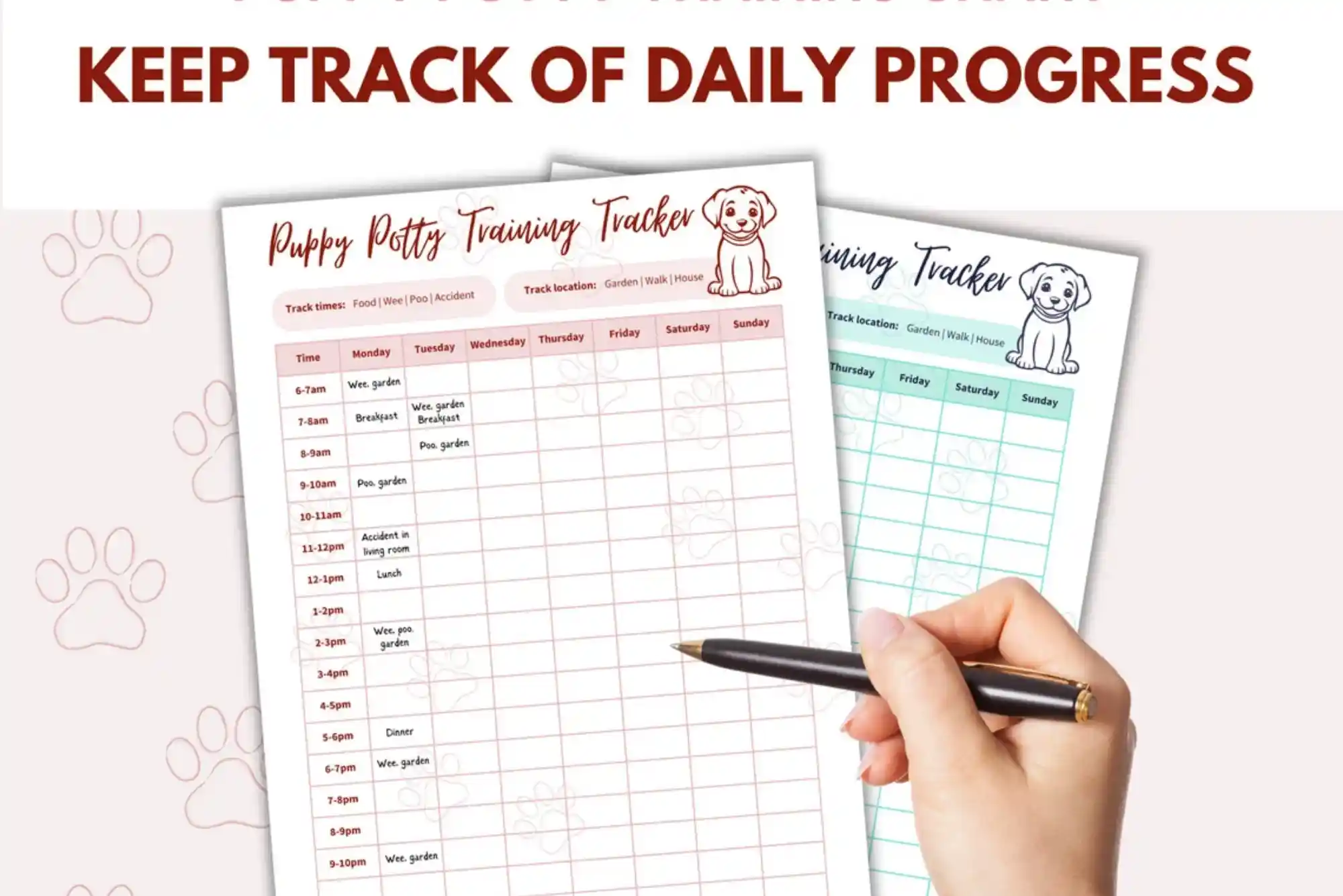
Keep a simple record if necessary. Write down meal times, toilet trips, successful outings, and accidents.
Patterns can help you predict your puppy’s needs more accurately.
Day 5: Begin Encouraging Communication
Your puppy may now be developing stronger awareness of the routine. Encourage calm communication without expecting advanced behaviour.
Some owners use bells near the door. Others teach puppies to sit near the exit.
However, the puppy should first understand that outside is the toilet location. A communication signal works best after the basic routine becomes familiar.
Watch carefully for signs that your puppy wants to go out. When you notice them, respond quickly.
This teaches your puppy that communicating their need leads to an appropriate toilet opportunity.
Day 6: Practice Consistency in Different Situations
Real life is not always perfectly scheduled. Therefore, day six should include gentle practice around normal household activities.
Continue following the established routine even when visitors arrive or household schedules change slightly.
Excitement can cause accidents. Puppies may need an additional toilet break after greeting visitors or playing energetically.
Do not assume several successful days mean training is complete. Continue supervising carefully.
For broader guidance on behaviour and development, explore the Puppy Training Pillar for additional puppy training information.
A strong foundation in house training can also support other areas of learning.
Day 7: Review Progress and Reinforce Success
On the seventh day, assess what your puppy has learned. Many puppies will show noticeable improvement after a consistent week.
You may see fewer accidents and more predictable toilet behaviour. Your puppy might also show early signs before needing to go.
Continue rewarding successful outdoor toileting. Positive reinforcement remains important after the first week.
Remember that housebreaking is an ongoing process. The seven-day schedule introduces the habit, but reliability develops through continued practice.
The goal of Puppy Potty Training Schedule: How to Housebreak in 7 Days is to establish a clear routine that you can maintain.
What to Do When Your Puppy Has an Accident
Accidents are a normal part of puppyhood. Even well-trained puppies can make mistakes.
If you catch your puppy during an accident, calmly interrupt without shouting. Take them to the appropriate toilet area if possible.
Avoid rubbing your puppy’s nose in the mess. This outdated approach can create fear and confusion.
Instead, focus on preventing future accidents.
Clean the area thoroughly. Remaining odours may encourage your puppy to return to the same spot.
Then review the situation. Ask whether the puppy had enough recent toilet opportunities or too much unsupervised freedom.
Crate Training and Potty Training
A properly introduced crate can support house training. Many puppies naturally prefer not to soil their sleeping area.
However, a crate should never be used to force a puppy to hold their bladder for unreasonable periods.
The crate should be appropriately sized and introduced positively. Your puppy should view it as a safe resting place.
Take your puppy outside immediately after leaving the crate. This creates a predictable sequence.
Crate training works best alongside regular toilet breaks, exercise, socialisation, and positive interactions.
The Role of Socialisation During House Training
Potty training is only one part of raising a confident puppy. Safe and appropriate socialisation also plays an important role in early development.
Introduce new experiences gradually. Keep interactions positive and suitable for your puppy’s vaccination status.
Reliable resources such as AKC Puppy Socialization can provide useful information about responsible puppy development.
Do not overwhelm your puppy with too many experiences at once. Short and positive sessions are often more effective.
A well-structured routine can help puppies feel secure while learning about the world.
Common Puppy Potty Training Mistakes
Giving Too Much Freedom
Allowing unrestricted access to the home too early often leads to accidents.
Keep your puppy in supervised areas until reliable habits develop.
Punishing Accidents
Punishment can make puppies afraid to toilet in front of you. It does not clearly explain where they should go.
Reward the correct behaviour instead.
Inconsistent Schedules
Different routines every day can confuse a young puppy.
Try to maintain consistent meal, sleep, and toilet times.
Waiting Too Long Between Breaks
Young puppies often need more opportunities than owners expect.
Frequent trips outside reduce accidents and reinforce the correct location.
Missing the Reward Timing
Rewards work best immediately after the desired behaviour.
Waiting several minutes can make the lesson unclear.
How Long Does Puppy Housebreaking Really Take?
Many puppies show improvement within the first week. However, complete house training can take considerably longer.
Age and individual development matter. Very young puppies have limited physical bladder control.
Consistency remains essential after the first seven days. Continue the routine until your puppy demonstrates reliable habits.
For more training resources and guidance, visit Ukkings and explore helpful puppy care content.
Progress is rarely perfectly linear. A puppy may have several successful days followed by an accident.
This does not mean training has failed. Simply return to closer supervision and a more frequent schedule.
Frequently Asked Questions
How often should I take my puppy outside to pee?
Take your puppy outside after waking, eating, drinking, playing, and napping. Young puppies often need additional frequent breaks.
Can a puppy really be potty trained in seven days?
A puppy can learn the basic routine within seven days. However, complete reliability usually requires continued training and development.
What is the fastest way to housebreak a puppy?
The fastest approach combines frequent toilet breaks, close supervision, consistent routines, and immediate positive reinforcement.
Should I wake my puppy up at night to pee?
Very young puppies may need nighttime toilet breaks. Their needs depend on age and development.
How do I stop my puppy from peeing inside?
Prevent indoor accidents through close supervision and frequent outdoor opportunities. Clean accidents thoroughly and avoid punishment.
Should I use puppy pads during house training?
Puppy pads can be useful in certain situations. However, they may slow the transition if your final goal is outdoor toileting.
Conclusion
A successful Puppy Potty Training Schedule: How to Housebreak in 7 Days depends on consistency, observation, and patience. The first week can establish powerful habits, but training should continue afterward.
Related Reading: How to Crate Train a Puppy Fast: Nighttime and Separation Anxiety Tips — full guide
Related Reading: How to Stop Puppy Biting and Mouthing Hands Immediately — full guide
Related Reading: Labrador Retriever Exercise Requirements by Age (Puppy to Senior) — full guide