Introduction
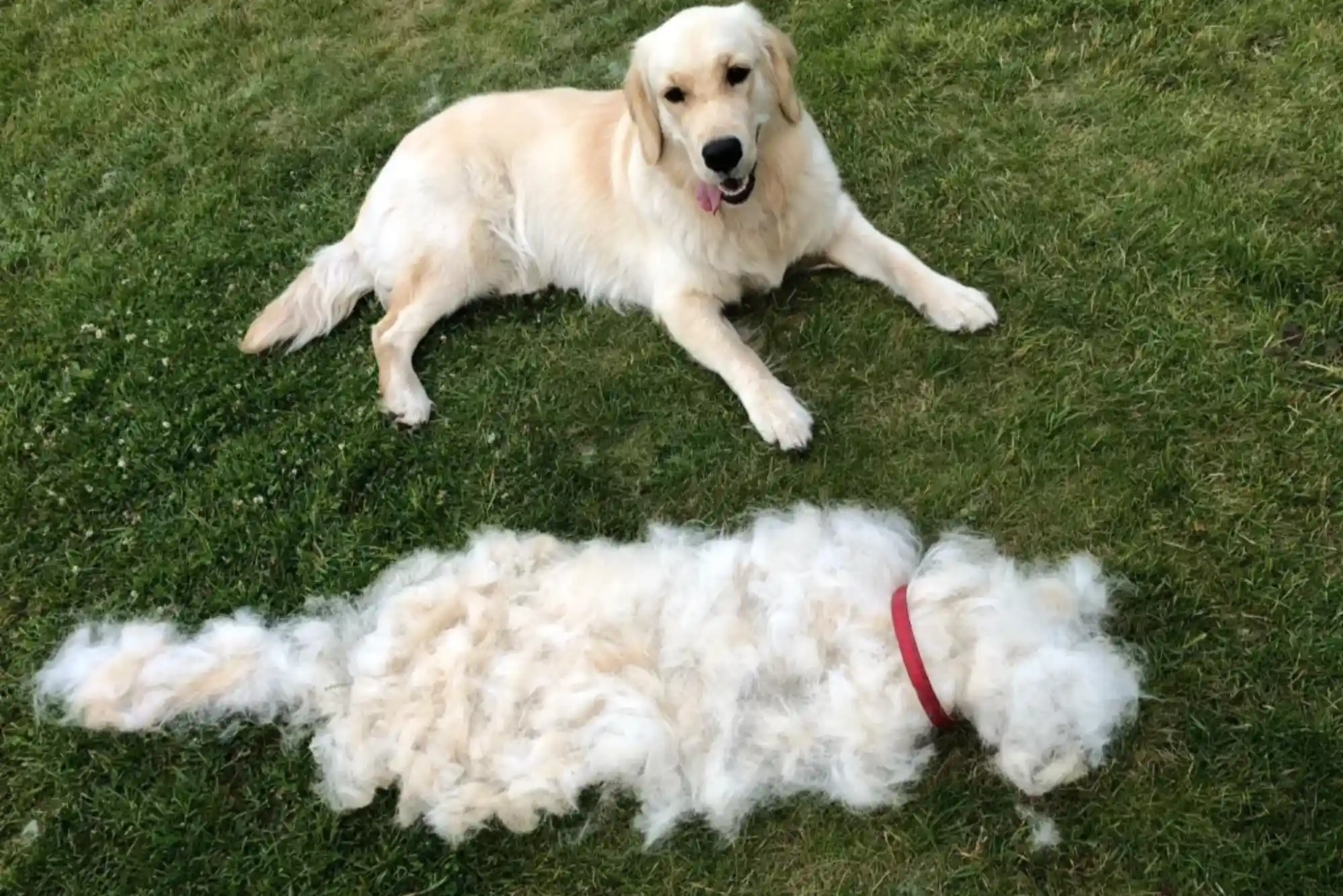
Golden Retrievers are famous for their friendly personalities, beautiful golden coats, and—unfortunately for some owners—their impressive ability to leave fur almost everywhere. If you are dealing with a noticeable increase in loose hair, understanding the Golden Retriever shedding season can make coat care much easier.
Golden Retrievers have medium-length double coats. They shed moderately throughout the year, but seasonal changes can trigger much heavier shedding. The American Kennel Club explains that Goldens typically shed more heavily once or twice a year, while regular brushing helps remove loose hair before it ends up around the home.
The good news is that shedding itself is normal. You cannot completely stop a healthy Golden Retriever from shedding, but you can make the process considerably more manageable. The right brushing routine, appropriate grooming tools, good bathing habits, and attention to skin health can dramatically reduce loose fur around your home.
Golden Retriever shedding season is also a useful time to pay closer attention to your dog’s skin and coat. Normal seasonal shedding should not usually cause bald patches, severe itching, inflamed skin, or sudden changes in coat quality. When those signs appear, the issue may be more than ordinary shedding.
Why Golden Retrievers Shed So Much
The main reason Golden Retrievers shed heavily is their double coat. This coat consists of a protective outer layer and a softer, denser undercoat.
The outer coat contains longer guard hairs that protect the skin from environmental exposure, dirt, moisture, and sunlight. The undercoat provides insulation and helps the dog regulate body temperature.

During normal coat turnover, older hairs eventually fall out and are replaced. Seasonal changes can accelerate this process, particularly when the undercoat is transitioning.
This is why you may notice small amounts of fur every day but suddenly find large clumps of hair during Golden Retriever shedding season.
Indoor living can also influence shedding patterns. Dogs exposed to relatively consistent indoor temperatures and artificial lighting may not follow perfectly predictable spring-and-fall shedding cycles. Some double-coated dogs can shed more frequently throughout the year.
When Is Golden Retriever Shedding Season?
For many Golden Retrievers, the heaviest shedding occurs during spring and fall.
Spring shedding generally involves losing some of the heavier winter undercoat as the weather becomes warmer. Fall shedding involves another coat transition as the dog prepares for colder conditions.
However, there is no universal calendar date for Golden Retriever shedding season. Climate, daylight, indoor living conditions, genetics, age, and individual coat characteristics can all affect when and how heavily a dog sheds.
If you live in a warm climate, your Golden may not follow the same pattern as a Golden living somewhere with cold winters. The AKC notes that some double-coated dogs living in warmer conditions may shed more frequently rather than limiting heavy coat changes strictly to spring and fall.
Instead of relying entirely on the calendar, watch your dog’s coat. A sudden increase in loose undercoat, especially when brushing produces much more hair than usual, is often a practical indication that seasonal shedding has started.
How to Reduce Fur Loss During Golden Retriever Shedding Season
You cannot prevent a healthy Golden Retriever from shedding, but you can control where much of that loose hair ends up. The goal is to remove dead and loose fur while protecting the coat and skin.
Brush More Frequently
Brushing is the most important part of managing Golden Retriever shedding season.
During normal periods, many Goldens benefit from brushing once or twice a week. During heavier shedding, you may need to increase this to several sessions per week or even daily brushing for a period of time. The AKC specifically recommends more frequent brushing during heavy shedding and notes that daily brushing can help remove dead hair before it spreads throughout the house.
Brush slowly rather than aggressively. Work through the coat section by section, paying particular attention to areas where loose undercoat can accumulate.
The feathering behind the ears, around the chest, legs, and tail deserves special attention because these areas can tangle more easily.
Choose the Right Grooming Tools
A Golden Retriever’s dense coat requires tools that can reach through the outer hair and remove loose undercoat.
A pin brush is useful for everyday grooming, while a metal comb can help identify smaller tangles. During heavy shedding, an appropriate undercoat rake or de-shedding tool can help loosen and remove dead undercoat.
Use grooming tools gently. Excessive pressure or repeated scraping against the skin can cause irritation and make grooming unpleasant for your dog.
The goal is not to remove every hair. A healthy coat naturally contains hair at different stages of growth, and some of it should remain in place.
Brush Before Bathing
Always brush your Golden Retriever before bathing whenever possible.
Loose hair and tangles can become more difficult to manage when they are wet. Removing dead fur beforehand also makes the bathing process more effective.
After shampooing, rinse thoroughly because a dense double coat can retain product. The AKC recommends brushing before bathing and thoroughly rinsing the coat afterward.
Use a Dog-Specific Shampoo
Bathing can help remove loose hair, dirt, and debris from the coat, but frequent unnecessary bathing can interfere with healthy skin and coat condition.
Choose a shampoo formulated specifically for dogs rather than using human shampoo. If your Golden has sensitive skin, persistent itching, dandruff, odor, or recurring irritation, speak with your veterinarian before experimenting with specialized products.
A bath can be especially useful during Golden Retriever shedding season, but it should complement—not replace—a regular brushing routine.
Do Not Shave a Golden Retriever to Stop Shedding
Shaving may seem like an obvious solution when your home is covered in fur, but it is generally not the appropriate way to manage a Golden Retriever’s double coat.
The outer coat and undercoat work together to protect the skin and assist with temperature regulation. Removing that protective coat can interfere with its natural function. The AKC specifically advises against shaving double-coated dogs for cooling or shedding management.
A Golden Retriever’s coat is designed to shed naturally. Instead of removing the entire coat, focus on brushing out loose undercoat and keeping the remaining coat clean, dry, and free from mats.
Small areas may sometimes require appropriate trimming for cleanliness or grooming purposes, but a close shave should not be considered a routine shedding solution.
Pay Attention to Diet and Overall Health
Good grooming starts with a healthy dog.
Nutrition does not magically stop seasonal shedding, but a balanced diet supports healthy skin and coat condition. Your Golden Retriever should receive a complete and balanced diet appropriate for its age and individual needs.
If the coat suddenly becomes dry, brittle, unusually thin, or dull, do not automatically assume that the dog is simply experiencing Golden Retriever shedding season.
Excessive or unusual hair loss can sometimes be associated with allergies, parasites, hormonal conditions, or other health problems. The AKC recommends veterinary evaluation when shedding is accompanied by bald patches, irritated skin, or other unusual changes.
Supplements should also be approached carefully. Do not add oils, vitamins, or other products simply because they are marketed for shedding without discussing them with your veterinarian.
How to Manage Golden Retriever Fur Around the House
Even an excellent grooming routine will not eliminate every loose hair.
The practical goal is to capture more fur during grooming rather than allowing it to accumulate throughout the house.
Brush your dog in an area that is easy to clean. Outdoors can be convenient when weather permits, while a washable floor or grooming area works well indoors.
During Golden Retriever shedding season, you may also want to vacuum more frequently. Pay special attention to furniture, carpets, corners, bedding, and areas where your dog regularly rests.
Washing dog bedding regularly can also prevent loose hair from accumulating in one place and then spreading throughout the home.
A consistent routine is generally easier than waiting until the coat is producing large amounts of loose fur.
Signs That Shedding May Not Be Normal
Seasonal shedding is expected, but not every case of hair loss should be dismissed as normal.
A veterinarian should evaluate your Golden Retriever if shedding is accompanied by bald spots, significant thinning, persistent itching, redness, scaling, sores, unpleasant skin odor, or a sudden and dramatic change in coat condition.
The difference is often visible in the skin beneath the fur. Normal shedding generally leaves healthy-looking skin and an even coat underneath. Excessive hair loss associated with skin disease may produce visible irritation or uneven patches.
Parasites, allergies, hormonal disorders, and other medical conditions can affect hair growth and shedding. If you are unsure whether your dog’s hair loss is normal, a veterinary examination is safer than assuming it is simply seasonal.
Creating a Simple Grooming Routine
The best approach to Golden Retriever shedding season is consistency rather than trying to solve everything in one grooming session.
During lighter shedding periods, regular weekly brushing may be sufficient for many dogs. As shedding increases, gradually increase brushing frequency.
Keep the sessions calm and comfortable. If your dog becomes restless, take short breaks instead of forcing a long grooming session.
Start with areas that are easiest for your dog to tolerate and gradually work toward more sensitive areas. Positive reinforcement can make grooming a routine your Golden accepts rather than something it tries to avoid.
Professional grooming can also be useful, especially when the undercoat becomes difficult to manage or the owner is uncomfortable handling certain grooming tasks.
Common Golden Retriever Shedding Mistakes
One common mistake is waiting until the coat is already shedding heavily before beginning regular brushing. By then, loose undercoat may already be distributed across furniture, flooring, and clothing.
Another mistake is brushing only the visible topcoat. The loose undercoat sits beneath the longer outer hairs, so grooming needs to reach through the coat without scraping the skin.
Using excessive force is another problem. More pressure does not necessarily mean more effective grooming. Gentle, methodical brushing is usually better for both coat condition and your dog’s comfort.
Finally, shaving the coat to solve a shedding problem can create more problems than it solves. A Golden Retriever’s double coat has an important protective function, so managing loose fur through grooming is preferable to removing the coat entirely.
Make Golden Retriever Shedding Season Manageable
Golden Retriever shedding season is a normal part of owning this beautiful double-coated breed. You cannot eliminate shedding completely, and trying to do so by shaving the coat is not recommended. Instead, focus on controlling loose fur through regular grooming.
Brush more frequently when shedding increases, choose tools that can safely reach the undercoat, bathe your dog appropriately, maintain good nutrition, and monitor the skin beneath the coat. A consistent routine means less loose fur around the house and a cleaner, more comfortable coat for your Golden Retriever.
Most importantly, learn to recognize the difference between normal seasonal shedding and unusual hair loss. If your dog’s coat changes suddenly or you notice bald patches, irritation, or persistent itching, contact your veterinarian.
FAQs
Do Golden Retrievers shed a lot?
Yes. Golden Retrievers shed moderately throughout the year and usually shed more heavily during seasonal coat changes. Their double coat is the main reason owners notice substantial amounts of loose fur.
How long do dogs shed for?
Shedding seasons can last several weeks or longer depending on the dog’s breed, coat, environment, and individual shedding pattern. The AKC notes that seasonal shedding may last from a few weeks to a couple of months.
How long does it take a dog to shed its winter coat?
It can take several weeks for a dog to complete a major winter-coat transition. During that period, loose hair may gradually decrease as the seasonal coat change finishes.
Do dogs shed all year round?
Many dogs do shed throughout the year, although the amount varies. Golden Retrievers are among the breeds that shed year-round and may experience significantly heavier shedding during seasonal changes.
What triggers dog shedding?
Changes in daylight and temperature are important triggers for seasonal coat changes. Indoor environments can influence the pattern as well, which is why some dogs may shed more continuously instead of following a perfectly predictable spring-and-fall schedule.
How much shedding is too much for a dog?
Shedding deserves veterinary attention when it involves bald patches, inflamed or irritated skin, severe itching, scaling, or a sudden unexplained increase in hair loss. Those signs can indicate an underlying medical issue rather than ordinary seasonal shedding.