
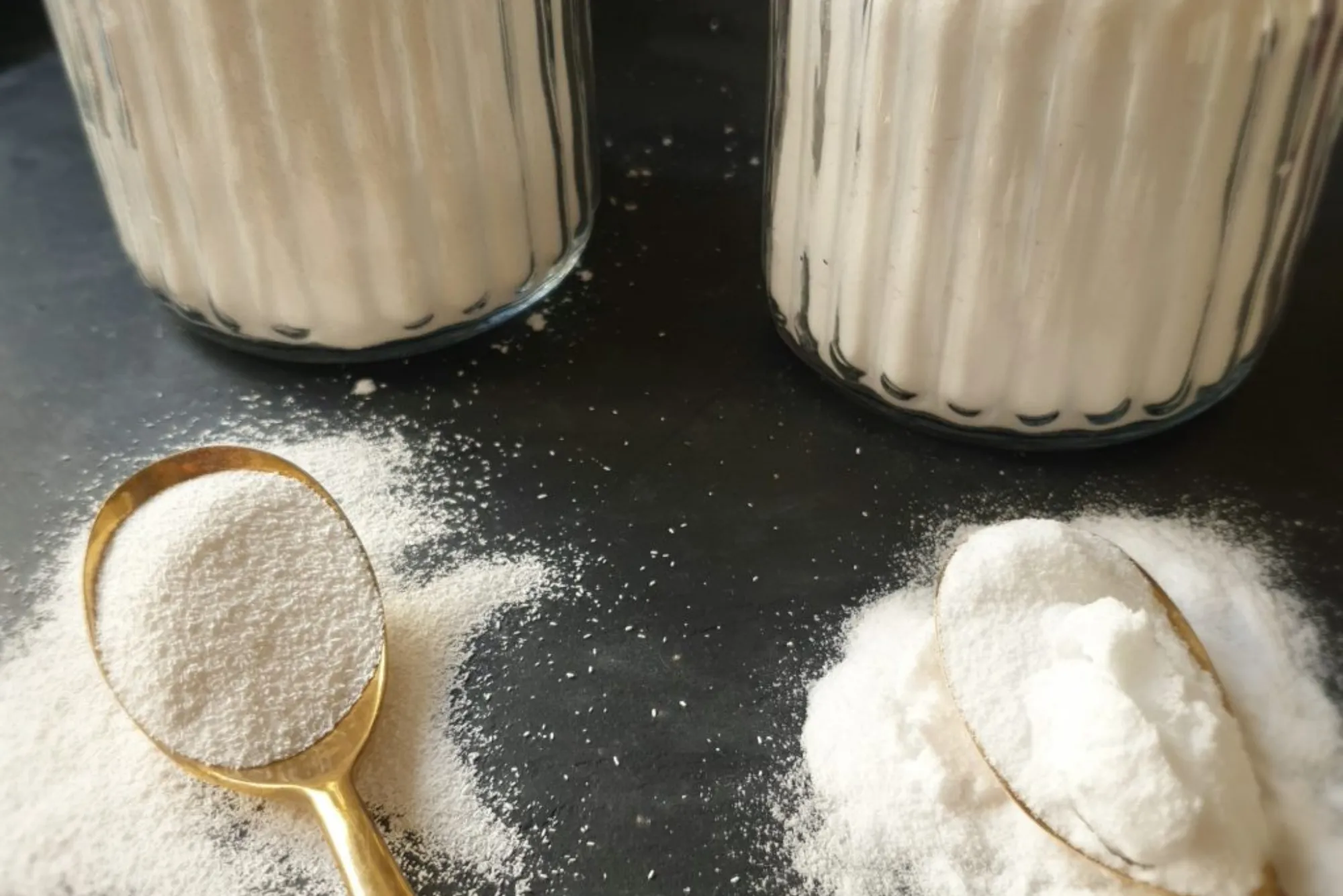
Open a British kitchen cupboard and you will probably find both, sitting side by side in similar-looking boxes. But are soda crystals the same as baking soda? Despite the confusingly similar names, the short answer is no. Soda crystals and baking soda are two different substances, with different chemical make-ups, different strengths and different jobs around the home. Using one where the other is needed can leave a cake flat, a drain still blocked or a load of laundry less clean than it should be. This guide explains the soda crystals vs baking soda question properly, so you always reach for the right box.
What Are Soda Crystals?
Soda crystals, also known as washing soda, are sodium carbonate. They have been a staple of British housekeeping for generations, long before the era of specialist sprays for every surface. Soda crystals come as coarse, white granules that dissolve in water to create a strongly alkaline solution. That alkalinity is what makes them such effective cleaners: alkaline solutions cut through grease, soften hard water and lift ground-in dirt from fabrics and hard surfaces.
Because they soften water, soda crystals are particularly valued in hard-water areas, where limescale-forming minerals reduce the performance of detergents. Adding a spoonful to a wash helps your usual detergent work harder, and using them regularly in machines can help keep limescale and grease build-up at bay. They are also inexpensive and contain no added fragrances or optical brighteners, which is why they remain popular with households trying to simplify their cleaning cupboards. If you enjoy practical household guides like this one, our home and living features cover plenty of other everyday topics in the same plain-speaking style.
What Is Baking Soda?
Baking soda is sodium bicarbonate, a much milder alkali than sodium carbonate. It is sold as a fine white powder and is best known as a raising agent in baking. When baking soda meets an acidic ingredient such as lemon juice, vinegar, buttermilk or honey, it produces carbon dioxide bubbles that make cakes, scones and soda bread rise. It also needs that acid to work properly; used on its own in a recipe without anything acidic, it can leave a slightly soapy, bitter taste.
Outside the kitchen, baking soda has a second career as a gentle cleaner and deodoriser. Its mild abrasiveness makes it useful for scrubbing sinks and hobs without scratching, and it absorbs odours rather than masking them, which is why an open box in the fridge is such a well-known trick. It is this double life, as both a food ingredient and a household helper, that causes much of the confusion with soda crystals.
Soda Crystals vs Baking Soda: The Key Differences
The simplest way to settle the soda crystals vs baking soda debate is to compare them directly. Soda crystals are sodium carbonate; baking soda is sodium bicarbonate. That small chemical difference has big practical consequences. A solution of soda crystals is far more alkaline, roughly pH 11, while baking soda sits at a gentler pH of around 8 to 9. Higher alkalinity means stronger grease-cutting power, but it also means soda crystals should never be eaten and should be handled with more care, ideally with gloves if you have sensitive skin.
Texture differs too. Soda crystals are coarse granules that need warm water to dissolve fully, whereas baking soda is a fine powder that dissolves quickly and can be sprinkled dry. Finally, their roles barely overlap in the kitchen: baking soda belongs in food, soda crystals absolutely do not. Nobody should ever substitute soda crystals in a recipe, and baking soda is too weak to do most of the heavy cleaning jobs soda crystals handle with ease. Readers who like methodical comparisons may also enjoy our practical explainers on everyday household questions, where we break down similar either-or choices.
Cleaning Jobs Where Soda Crystals Win
For heavy-duty cleaning, soda crystals are the stronger tool. Dissolved in hot water, they shift greasy cooker tops, extractor filters and oven racks far more effectively than baking soda. A strong solution poured down a slow drain, left for half an hour and flushed with hot water, can clear the greasy build-up that causes most household blockages. In the laundry, they tackle sweat-stained shirt collars, greasy overalls and dingy whites, and they are a traditional remedy for freshening up a washing machine with a hot, empty cycle.
Soda crystals are also handy outdoors and in the bathroom: mossy patios, grubby grouting and stained mugs all respond well. The golden rule is to test any delicate surface first and to avoid using them on aluminium, which strong alkalis can damage. Our guides to caring for your home return to this theme often: the cheapest products in the cupboard are frequently the most versatile.
Where Baking Soda Is the Better Choice
Baking soda wins wherever gentleness matters. It is the right choice for deodorising carpets and upholstery (sprinkle, leave, vacuum), freshening trainers, and scrubbing delicate surfaces such as enamel baths and non-stick pans where a harsh cleaner might do damage. In the kitchen it is irreplaceable: no baking soda means no rise in your Victoria sponge, your banana bread or your homemade soda bread.
It is also the safer option around food preparation areas and for quick, everyday wipe-downs. Many households keep a simple paste of baking soda and water for tackling tea stains in mugs and light marks on worktops. If you are interested in how traditional ingredients are finding new audiences, our features on British food and home traditions explore that revival in more depth.
Safety, Storage and Handling
Both products are inexpensive and widely available, but they should be stored and handled differently. Keep soda crystals in a sealed container away from moisture, as they absorb water from the air and clump. Treat them as a proper cleaning chemical: keep them away from children, avoid contact with eyes, and wear gloves for prolonged use. Never mix them into food or drink, and label the container clearly if you decant them, because the granules can be mistaken for sugar or salt by a careless eye.
Baking soda is food-safe, but it still deserves a cool, dry cupboard; an old box gradually loses its raising power, which is why a flat cake is often traced back to bicarbonate that has been open for a year. A quick test is to drop a little into vinegar: if it fizzes vigorously, it is still active. Households that prefer a back-to-basics approach often pair these staples with the kind of thrifty thinking in our money-saving and lifestyle coverage.
So, Which One Do You Need?
If you can only keep one, baking soda is the more versatile all-rounder for a small household, because it covers baking, deodorising and light cleaning in a single box. But if you regularly fight greasy ovens, blocked drains, hard water or heavily soiled laundry, soda crystals earn their place many times over. In truth, the two products complement rather than compete with each other: one is a food ingredient that can clean gently, the other is a cleaning powerhouse that should stay well away from food.
So, are soda crystals the same as baking soda? Definitely not, and now you know exactly why. Keep both clearly labelled, use each for the jobs it does best, and you will get better results in the kitchen and around the home, usually for pennies per use.