
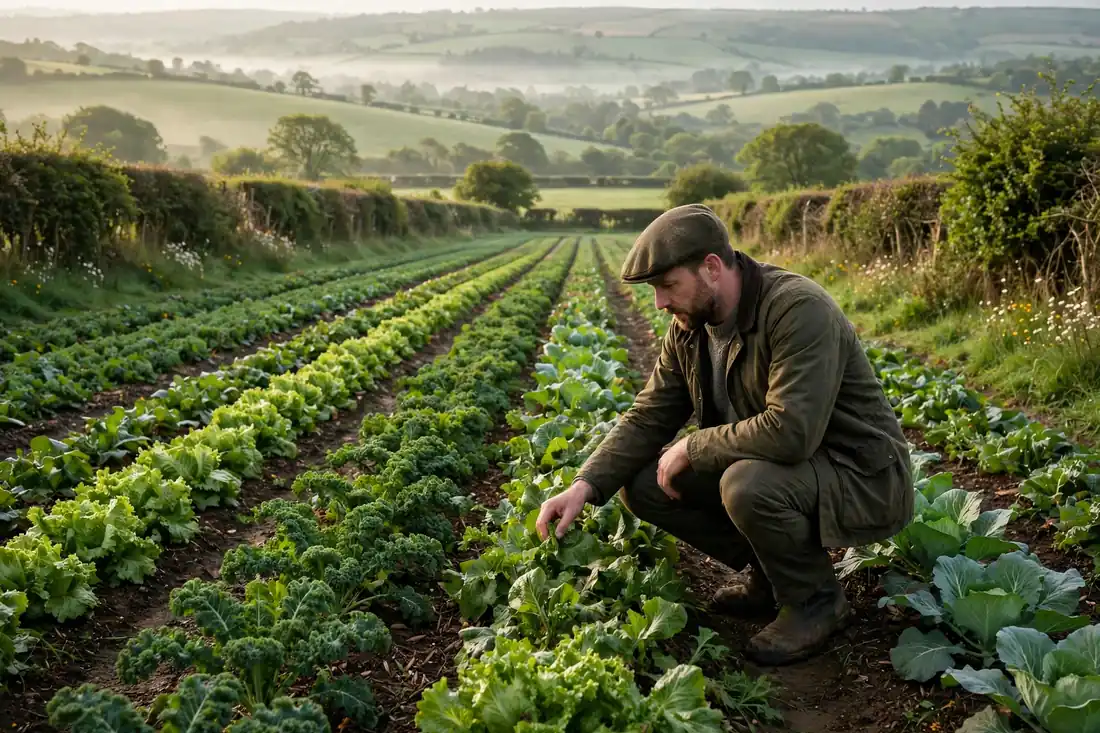
Something has been quietly growing in the British countryside. Organic farming in the UK, once a niche pursuit associated with smallholdings and health food shops, has become a significant movement spanning supermarkets, restaurants, policy debates and thousands of farms. More shoppers are asking how their food is produced, more farmers are weighing a different way of working, and the land itself is at the centre of arguments about climate, nature and health. This closer look at the rise of organic farming in the UK examines what is driving it, what it involves and where it might lead.
What Organic Farming Actually Means
Organic is a legal term, not a marketing mood. Farms must be certified by an approved body, such as the Soil Association or Organic Farmers & Growers, against standards that prohibit synthetic pesticides and fertilisers, routine antibiotics and genetically modified organisms, and that require high levels of animal welfare and soil care. Conversion takes years, during which farmers follow organic rules without receiving organic prices, one of the system’s real tests of commitment.
The philosophy beneath the rules is ecological: build fertile soil, work with natural systems for pest and disease control, rotate crops, keep livestock outdoors and let the farm function as an ecosystem rather than a factory floor. Our food and farming features explain these standards and how certification is policed.
Why Demand Keeps Growing
The UK organic market has grown through recessions, pandemics and cost-of-living squeezes, dipping when household budgets tighten and recovering as they ease. Its drivers are layered: concern about pesticide residues and ultra-processed food, animal welfare, taste, and increasingly the environment, since organic farms consistently support more wildlife than conventional neighbours, from pollinators to farmland birds.
Retail has followed the demand. Every major supermarket now runs an organic range, box schemes and farm shops have multiplied, and organic options appear on menus far beyond specialist restaurants. Younger shoppers in particular report weighing production methods alongside price, a shift our consumer features have tracked across food categories.
The Farmer’s Calculation
For farmers, converting is an economic as well as an ideological decision. Organic systems typically yield less per hectare but command premium prices and lower input costs, since money is not spent on synthetic fertiliser and sprays. Labour costs rise, weeds become a management challenge rather than a chemical problem, and livestock systems must be redesigned around outdoor access and preventive health.
Support matters: agri-environment schemes increasingly reward the public goods organic farms provide, carbon, clean water, biodiversity, and new entrants are finding routes in through community farms, share farming and tenancy arrangements. The farmers who succeed tend to be meticulous managers; organic farming forgives sloppy planning less than conventional methods do. Our rural business coverage profiles farms that have made the transition work commercially.
Soil, Climate and the Environmental Case
The environmental argument for organic farming in the UK starts underground. Organic soils, fed with compost, manure and diverse rotations, typically hold more organic matter, which means better water retention, less erosion and more carbon stored. Above ground, the absence of insecticides and the presence of hedgerows, margins and varied crops create habitat that intensive systems struggle to match.
Honest assessment includes the counter-arguments: lower yields mean more land needed for the same output, and if that land comes from imports, the footprint may simply move abroad. Researchers therefore increasingly frame organic as one part of a wider shift, alongside eating less but better meat, cutting waste and restoring nature on land spared by smarter farming. Our environment features weigh this evidence as it develops.
Where to See It, Taste It and Support It
The public face of the movement is welcoming. Organic farms host open days, farm walks and pick-your-own schemes; box schemes deliver seasonal produce with the mud still on; and September’s annual organic promotion brings farms, shops and restaurants together. For shoppers, the practical advice is simple: look for the certification symbols, buy in season, and treat organic as part of a pattern that includes local and high-welfare choices where budgets allow.
Cooks have embraced the philosophy too, since ingredients produced with care reward simple treatment, a connection our features on British food and seasonal cooking celebrate regularly.
Learning the Skills: A New Generation of Growers
Perhaps the most encouraging sign is demographic. Agricultural colleges report strong interest in organic and regenerative courses, land-based charities run traineeships for career changers, and market gardens on the edges of cities are training growers who may never own a farm in the traditional sense. Community-supported agriculture schemes, where households subscribe to a farm and share its harvest and its risks, have multiplied, creating entry points that do not require inherited land or large capital.
This new generation brings digital fluency to an old philosophy: soil data from sensors, direct sales through online shops, and social media storytelling that lets customers follow a crop from seed to supper. The result is a sector that feels less like a retreat from modernity and more like a redesign of it, combining ecological principles with contemporary business sense.
The Direction of Travel
Organic land still represents a small share of UK farmland, and nobody sensible predicts it will become the majority soon. But its influence is disproportionate: techniques pioneered organically, cover crops, herbal leys, integrated pest management, are now mainstream, and its standards shape debates about what all farming should become.
The rise of organic farming in the UK is best understood not as a takeover but as a long argument being steadily won in part: that how we farm matters as much as how much we produce. On the evidence of the fields, shops and kitchens of Britain, that argument is winning new converts every season.