Introduction
Learning how to socialize a reactive dog with other dogs safely requires patience, planning, and a good understanding of canine behavior. A reactive dog may bark, lunge, growl, freeze, or pull toward other dogs. These reactions do not always mean the dog is aggressive. Often, they come from fear, frustration, overexcitement, or uncertainty.
Socialization is not about making your dog greet every dog they see. Instead, the goal is to help your dog remain calm and comfortable around other dogs. With controlled exposure and positive experiences, many reactive dogs can improve their ability to handle canine encounters.
The process should always match your dog’s comfort level. Moving too quickly can increase stress and make reactions stronger. Therefore, successful socialization depends more on consistency than speed.
Understanding Why Your Dog Is Reactive
Before learning how to socialize a reactive dog with other dogs safely, it helps to understand what triggers the behavior. Dogs become reactive for different reasons, and each situation requires a slightly different approach.
Some dogs react because they are frightened by unfamiliar animals. They may bark or lunge because they want another dog to move away. Other dogs become frustrated when they cannot reach a dog while walking on a leash.
Previous experiences can also influence reactions. A dog that has been attacked, poorly socialized, or repeatedly overwhelmed may become defensive around other dogs. Even a naturally sensitive dog can develop reactivity after several stressful encounters.

Your dog’s body language can provide important clues. Watch for stiff posture, intense staring, tucked tails, pinned ears, lip licking, yawning, or sudden changes in movement. These signals can appear before barking or lunging begins.
What Socialization Really Means for a Reactive Dog
Socialization does not mean forcing your dog to interact with other dogs. In fact, direct greetings may be inappropriate during the early stages.
A better goal is teaching your dog that seeing another dog does not automatically require a reaction. Your dog can notice another animal, remain calm, and continue walking with you.
This is especially important for dogs that become overwhelmed at close distances. They need enough space to think and respond to your guidance.
When considering how to socialize a reactive dog with other dogs safely, remember that neutrality is a valuable form of socialization. Your dog does not need to become friends with every dog.
Start at a Comfortable Distance
Distance is one of the most useful tools when working with canine reactivity. Begin far enough away that your dog notices another dog without immediately barking or lunging.
This distance is sometimes called your dog’s threshold. Below that threshold, your dog may still be able to listen, eat treats, and respond to simple cues.
For example, your dog may react when another dog comes within ten feet. However, they might remain relaxed when the dog is thirty feet away.
Start with the distance where your dog can remain calm. Over time, you can gradually reduce the distance as your dog’s confidence improves.
There is no benefit to rushing this process. A calm experience at a greater distance is usually more productive than a stressful close encounter.
Use Positive Reinforcement
Positive reinforcement can help change your dog’s emotional response to other dogs. Whenever your dog notices another dog without reacting, reward the calm behavior.
You can use small, highly valuable treats that your dog enjoys. Timing matters because the reward should follow the desired behavior quickly.
Over repeated sessions, your dog can begin connecting the sight of another dog with something positive. This process can gradually make unfamiliar dogs less stressful.
You can also praise your dog calmly when they look at you after noticing another dog. The objective is to encourage your dog to check in with you instead of becoming fixated on the trigger.
Teach Useful Cues Before Dog Encounters
Training basic cues at home can make outdoor socialization easier. Your dog should understand simple behaviors such as responding to their name, looking at you, and moving with you.
Practice these skills in quiet environments first. Then gradually use them in places with more distractions.
A reliable recall is particularly useful when appropriate and safely practiced. However, never rely on recall alone around unfamiliar dogs or in unsafe areas.
Loose-leash walking can also reduce tension during encounters. A tight leash can sometimes increase frustration or make a nervous dog feel trapped.
Choose Controlled Socialization Environments
Busy dog parks are often not the best starting point for a reactive dog. Multiple unfamiliar dogs can create too much stimulation at once.
Instead, consider controlled situations with calm, well-behaved dogs. A large open area can provide enough space for both dogs to remain comfortable.
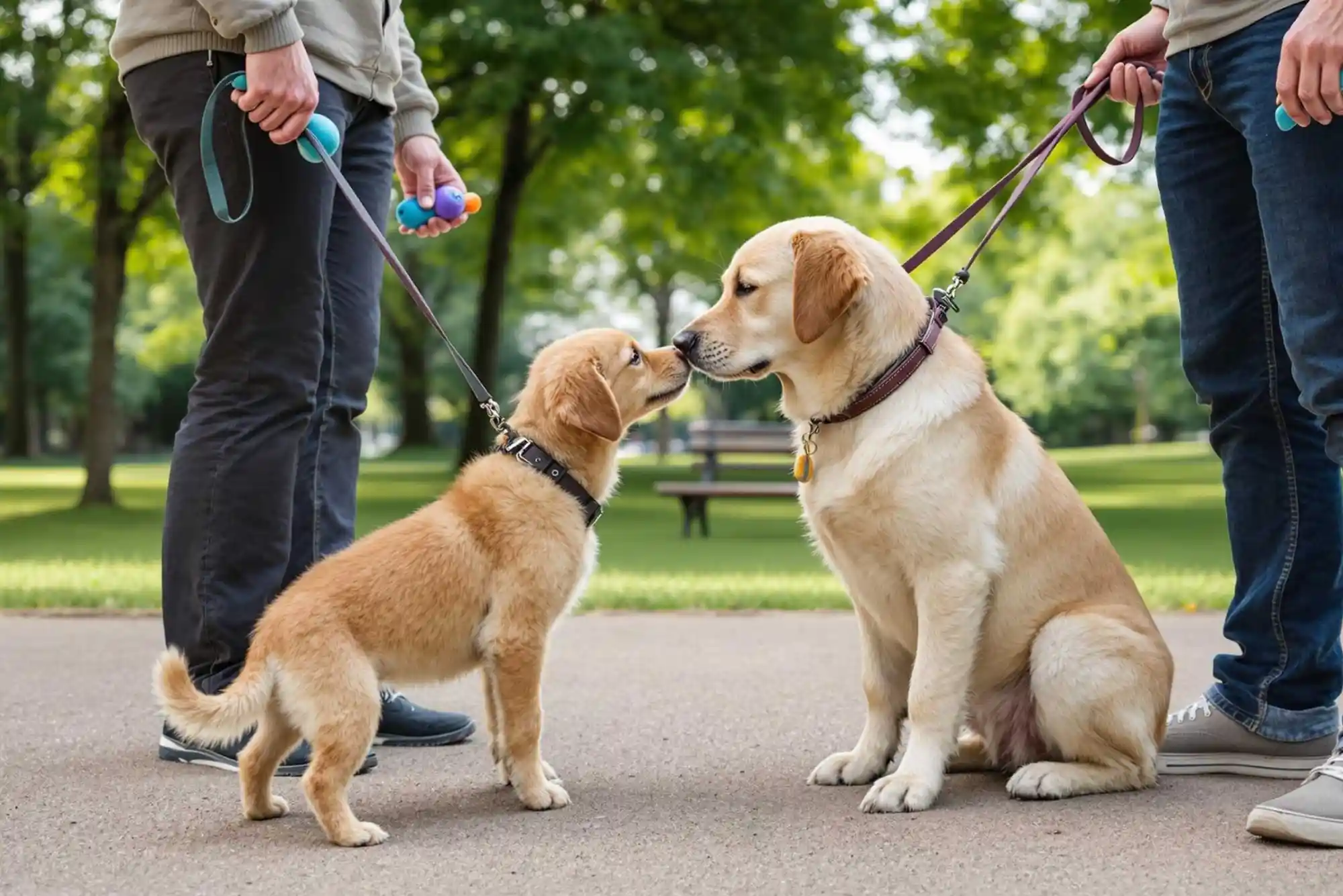
Parallel walking can be particularly useful. Two dogs walk in the same general direction while maintaining a safe distance between them.
This allows your dog to experience another dog without facing direct social pressure. As both dogs become more relaxed, the distance can sometimes be reduced gradually.
Consider Parallel Walking
Parallel walking is one of the most practical approaches when learning how to socialize a reactive dog with other dogs safely. It gives dogs something natural to do while allowing them to observe each other.
Start with the dogs separated by enough space to prevent reactions. Walk in the same direction and reward your dog for calm behavior.
Avoid forcing the dogs to walk directly beside each other immediately. The distance should remain flexible according to their body language.
If either dog becomes tense, increase the distance. Once both dogs relax again, you can continue the session.
With repeated successful walks, some dogs become comfortable enough to walk closer together. However, there is no requirement to reach a nose-to-nose greeting.
Avoid Forced Greetings
Forced greetings can undermine progress. A reactive dog may feel trapped when another dog approaches while they are restrained.
Instead of allowing unfamiliar dogs to rush over, create distance whenever possible. Politely ask other owners to give your dog space.
If your dog begins showing signs of stress, move away before the reaction becomes intense. Leaving the situation is not failure. It is a useful training decision.
Your dog learns more effectively when they remain below their reaction threshold. Repeated overwhelming encounters can make future training harder.
Read Your Dog’s Body Language
Understanding body language is essential for safe socialization. A relaxed dog may have loose muscles, natural movement, and a soft facial expression.
Stress can appear through subtle changes. Your dog may suddenly stop taking treats, stare intensely, turn their head away, or become unusually stiff.
These signals matter because barking is often not the first sign of discomfort. Learning to recognize earlier warning signs allows you to respond sooner.
When your dog becomes tense, create additional space. This gives them an opportunity to recover before the situation escalates.
Progress Slowly and Track Improvement
Every dog progresses differently. Some dogs may improve within weeks, while others require months of careful practice.
Keep training sessions short and manageable. Several successful sessions can be more useful than one long session that becomes stressful.
Notice small improvements. Your dog may recover faster after seeing another dog, look at you more often, or tolerate a slightly closer distance.
These changes are meaningful. Socialization should be measured by improved comfort and coping skills rather than the number of dog greetings completed.
When Professional Help Is Appropriate
Some reactive dogs need professional guidance. This is particularly important when reactions are intense, unpredictable, or difficult to manage safely.
A qualified veterinary behaviorist or experienced reward-based behavior professional can help identify triggers and develop an appropriate training plan.
Professional support is also valuable when your dog has a history of biting or has caused injury. Safety should always come before socialization goals.
A professional can also help determine whether pain, anxiety, or another underlying issue may contribute to the behavior. Veterinary assessment can therefore be an important part of the process.
Common Mistakes to Avoid
One common mistake is moving closer too quickly. Owners may assume that repeated exposure will automatically make a dog comfortable. Unfortunately, overwhelming exposure can sometimes strengthen the unwanted response.
Another mistake is punishing barking or growling without addressing the underlying emotion. These behaviors can communicate discomfort or stress.
Ignoring early warning signs can also create problems. If your dog repeatedly reaches the point of lunging, training becomes more difficult.
Finally, avoid comparing your dog’s progress with another dog’s progress. Reactivity has many causes, and every dog has different needs.
How Long Does It Take to Socialize a Reactive Dog?
There is no universal timeline for socializing a reactive dog. The process depends on age, temperament, previous experiences, triggers, and training consistency.
Some dogs become noticeably calmer after several weeks of structured practice. Others need longer-term behavior modification.
The most important measure is gradual improvement. A dog that can calmly observe another dog from a safe distance is already making progress.
Remember that the final goal may be peaceful coexistence rather than direct play. For many reactive dogs, calmly passing another dog is a major achievement.
Can a Reactive Dog Ever Enjoy Other Dogs?
Yes, some reactive dogs can develop comfortable relationships with other dogs. However, outcomes vary between individuals.
Some dogs eventually enjoy playing with carefully selected companions. Others prefer limited interaction and feel most comfortable simply being near other dogs.
Your dog’s personality and history should guide your expectations. Socialization should focus on creating positive experiences rather than forcing a particular outcome.
A calm, predictable environment can help your dog build confidence. Over time, successful experiences may change how your dog responds to canine triggers.
FAQ
Can a reactive dog be socialized?
Yes, many reactive dogs can improve with structured training and controlled exposure. Socialization should focus on calm observation and emotional comfort.
How do I introduce my reactive dog to another dog?
Start at a comfortable distance and use parallel walking. Reward calm behavior and gradually reduce distance only when both dogs remain relaxed.
Should I take a reactive dog to a dog park?
Dog parks can be overwhelming for reactive dogs because they involve unpredictable interactions. Controlled environments are generally easier to manage during early training.
How do I stop my dog from reacting to other dogs?
Identify your dog’s trigger distance and work below that threshold. Reward calm behavior whenever your dog notices another dog.
Can a reactive dog live with another dog?
Some reactive dogs can successfully live with another dog. Careful introductions, appropriate management, and professional guidance may be necessary.
Conclusion
Learning how to socialize a reactive dog with other dogs safely is a gradual process built around patience, distance, positive reinforcement, and careful observation. Your dog does not need to greet every animal to become better socialized.