
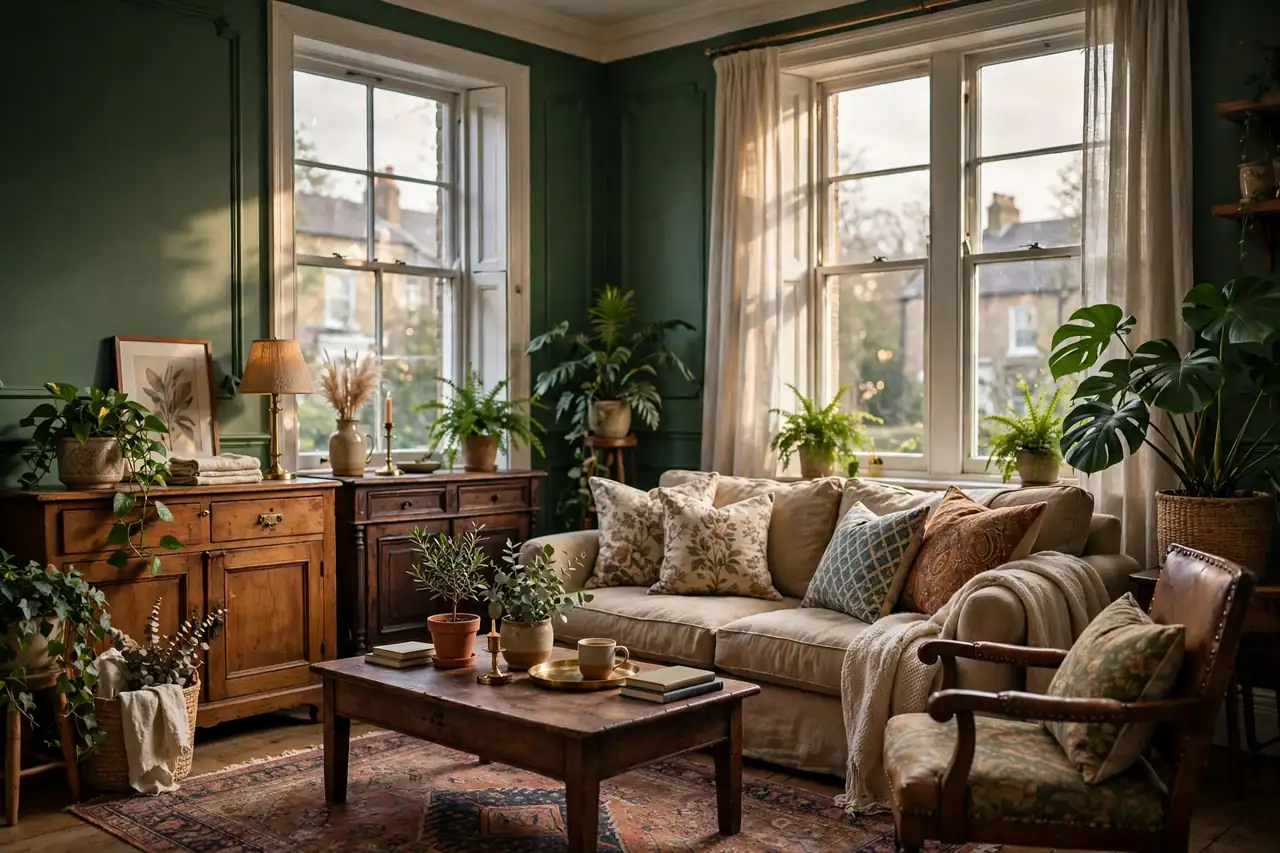
British homes are in the middle of a quiet style revolution. After a decade of grey walls and identikit showroom looks, UK home decor trends have swung towards warmth, personality and craft, shaped by our climate, our housing stock and a growing desire for homes that feel collected rather than copied. Whether you live in a Victorian terrace, a new-build flat or a country cottage, the current direction of the UK’s interior design scene offers ideas that work at every budget. Here are the trends that matter, and how to use them without redecorating every year.
Warm Neutrals and Colour Confidence
The most visible of the current UK home decor trends is the farewell to cold grey. In its place have come warm, muddy neutrals: stone, putty, mushroom and soft clay tones that flatter northern light instead of fighting it. On top of that warmer base, homeowners are layering confident colour in contained doses, a deep green study, a burgundy snug, butter-yellow kitchen cabinets, rather than painting everything one safe shade.
The trick is to test colours in your own light. British daylight is cool and changeable, so a colour that glowed in a sunlit showroom may turn flat at home. Paint large swatches, live with them for a few days and view them morning and evening. Our home and interiors features include more guidance on choosing colours for British light.
Natural Materials and Honest Texture
Texture has become the status symbol of the thoughtful home. Limewash and clay paints give walls a soft, chalky depth that flat emulsion cannot match. Natural materials are everywhere: jute and wool rugs, linen curtains, rattan and cane furniture, unlacquered brass that patinas with use, and timber with visible grain rather than plastic-wrapped perfection.
This direction suits British housing particularly well, because so many of our homes have original features worth celebrating: floorboards under carpet, fireplaces behind boards, ceiling roses under layers of paint. Restoring rather than replacing is both a style choice and a sustainable one. If you are renovating, our property and renovation guides look at where restoration adds value and where it does not.
The Return of Pattern and Traditional Detail
Pattern is back, led by a revival of heritage prints: block-printed florals, ticking stripes, checks and small-scale geometrics on curtains, cushions and upholstery. Wallpaper has completed its comeback too, increasingly used on ceilings and in small spaces such as cloakrooms and hallways, where a bold print turns an overlooked corner into a talking point.
Traditional details are being reinstated even in modern homes: picture rails, skirting with presence, panelled walls and built-in joinery that makes storage look architectural. These touches nod to the past without turning a home into a museum. Mixing them with contemporary furniture keeps the balance fresh, an approach we explore in our design features on British style.
Vintage, Reclaimed and One-of-a-Kind
Perhaps the most British of the current UK home decor trends is the embrace of the second-hand. Charity shops, auctions, antiques markets and online marketplaces are now the first port of call for many decorators, prized for solid timber furniture, vintage lighting and art with a story. A room furnished entirely from one retailer looks like a catalogue; a room built over time looks like a life.
There are practical benefits too. Older furniture is often better made than its budget modern equivalent, and buying used is the most sustainable decorating choice available. The skill is in the edit: one or two characterful pieces per room, restored or reupholstered where needed, anchor a scheme far better than a clutter of curios. Readers who enjoy the hunt may like our features on British crafts and makers, whose work pairs beautifully with vintage finds.
Flexible Rooms for Real Life
Working from home has permanently changed what British homes must do, and interiors have adapted. The trends now favour flexibility: spare rooms that combine guest bed, desk and exercise space without feeling compromised; garden rooms and converted garages; clever zoning in open-plan spaces using rugs, shelving and lighting rather than walls.
Lighting design has matured alongside this shift. Layered lighting, ceiling lights for general brightness, lamps for atmosphere, task lights for work, has replaced the single pendant approach, and warm-white bulbs suited to our long evenings make rooms feel welcoming rather than clinical. Small flats benefit most of all from these ideas, as our small-space living guides demonstrate.
Rental-Friendly and Budget-Smart Decorating
Not every reader owns their home, and the most useful decorating ideas are often those that leave no trace. Removable wallpaper, over-door hooks, plug-in wall lights, rugs layered over tired carpets and furniture chosen for versatility all transform rented rooms without risking a deposit. Landlords increasingly accept reasonable redecoration by agreement, so it is always worth asking before assuming a wall must stay magnolia.
Budget discipline helps owners too. The decorators whose rooms look most expensive usually spend on one or two things that matter, a sofa that will last, curtains properly made, and save inventively elsewhere: paint is the cheapest transformation in any room, and moving furniture you already own costs nothing at all.
Using Trends Without Becoming Their Victim
Trends are a menu, not a rulebook. The homes that age best borrow the elements that suit their architecture and their owners’ lives, and ignore the rest. Invest in the permanent bones, flooring, joinery, lighting, in classic quality; experiment cheaply with paint, textiles and accessories, which can change with your taste.
The real story of UK home decor trends is not any single colour or fabric. It is a move towards homes that are warmer, more personal and more honest about how we live. Take the ideas that speak to you, test them at small scale, and let your home evolve. That is how the best British interiors have always been made.