
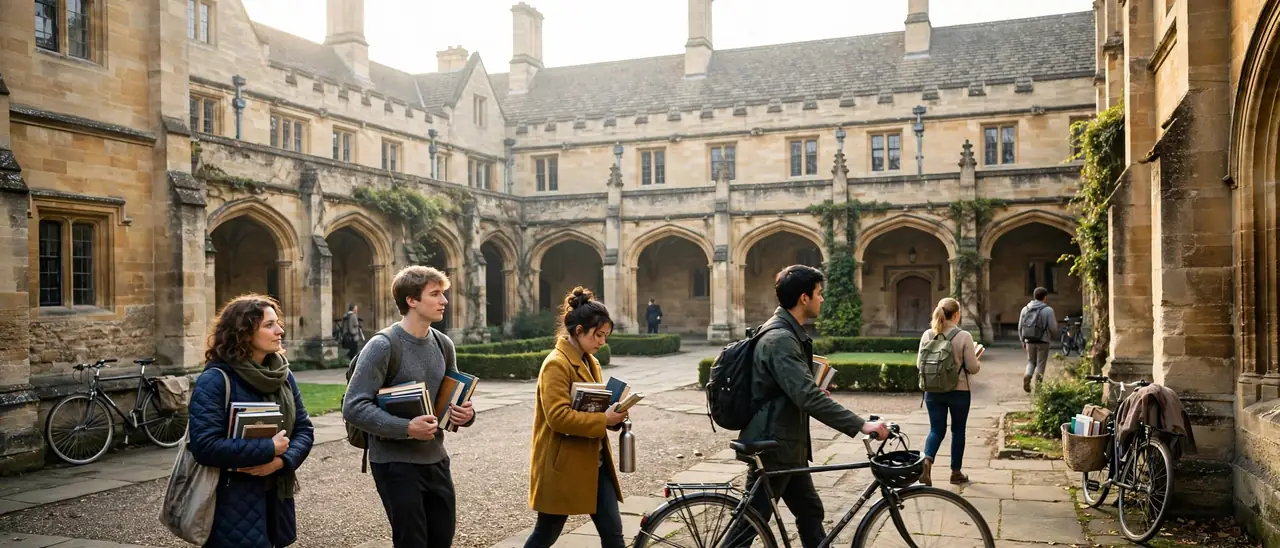
British universities are among the country’s greatest assets: engines of research, anchors of their towns and cities, and a rite of passage for hundreds of thousands of young people each year. Yet the sector faces a squeeze from every direction, funding pressures, changing student expectations, new technology and global competition. The future of higher education in the UK will not look exactly like its past. This article examines the trends and challenges shaping what comes next, and what they mean for students, families and the wider country.
The Funding Squeeze
The central challenge in the future of higher education in the UK is money. Tuition fees for home students in England were frozen for years while inflation eroded their value, leaving many universities teaching domestic undergraduates at a loss and cross-subsidising from international student fees and research income. When international recruitment wobbles, as it has with visa policy changes, institutional finances wobble with it, and some universities have cut courses and staff.
There are no painless answers. Raising fees is politically difficult, direct public funding competes with every other priority, and efficiency drives have limits in a people business. Expect continued debate about the balance, and more differentiation: research-intensive universities, teaching-focused institutions and specialist providers increasingly playing different roles. Our news coverage follows the policy arguments as they develop.
What Students Want Is Changing
Students are more discerning customers than their parents were. They weigh employability, contact hours, mental health support and value for money alongside prestige, and they say so in national surveys that universities ignore at their peril. Demand is shifting towards subjects with clear career paths, health, computing, engineering and business, while some humanities courses have seen applications soften, a trend universities and cultural commentators view with concern.
Flexibility is the rising demand: part-time and modular study, degree apprenticeships that combine work and study without tuition debt, and short courses for adults reskilling mid-career. The government’s Lifelong Learning Entitlement in England is designed to fund exactly this kind of pick-and-mix study across a lifetime. Our education features explore how these routes compare with the traditional three-year degree.
Technology and the AI Question
Artificial intelligence has arrived in the seminar room whether universities invited it or not. Students use AI tools for research, drafting and revision; lecturers use them for feedback and administration; and assessment is being redesigned, with a revival of in-person exams, oral defences and process-based coursework that shows how an answer was built. The universities handling this best treat AI literacy as a graduate skill to be taught, not merely a misconduct risk to be policed.
Online and hybrid learning, normalised during the pandemic, has settled into a supporting role: lectures and resources online, with in-person time reserved for discussion, labs and community. Fully online degrees from respected universities are also expanding access for students who cannot relocate. Our technology coverage looks at how these tools are changing teaching across the sector.
Research, Regions and the Wider Mission
Universities are not only teaching businesses. They produce the research behind medical breakthroughs, climate solutions and new industries, and they are often the largest employer and cultural hub in their town. The future of higher education in the UK is therefore bound up with regional policy: ministers want universities to drive local growth, spin out companies and anchor skills strategies, even as funding pressures pull the other way.
Internationally, British universities remain a magnet, consistently ranked among the world’s best and drawing students and researchers globally. Protecting that standing, through sensible visa policy, research collaboration and investment, is one of the clearest economic interests the country has. Our business features examine the university spin-outs and research partnerships translating ideas into companies.
Wellbeing, Access and Fairness
Two quieter challenges will shape the sector’s legitimacy. The first is student wellbeing: universities have expanded counselling and support substantially, but demand keeps growing, and the transition to independent living remains a vulnerable moment for many young people. The second is access: despite years of widening-participation work, students from the most advantaged backgrounds still enter the most selective universities at far higher rates. Progress is real but slow, and it depends heavily on schools, attainment gaps and the advice available to families, themes our family and society features return to often.
The Student Experience Under the Microscope
What is it actually like to study now? The cost of living has joined tuition as a defining pressure: rents in university cities have climbed steeply, part-time work alongside study is the norm for many students, and the maintenance support available has not always kept pace. Universities have responded with hardship funds, cheaper accommodation blocks and timetabling that clusters teaching so students can hold jobs, but the squeeze shapes choices, including the growing number who live at home and commute.
Contact time and teaching quality remain the heart of satisfaction. The institutions earning loyalty tend to be those where students feel known: small-group teaching that survived the lecture-capture era, academics with time to teach, and feedback that arrives while it can still change the next piece of work.
A Sector Adapting, as It Always Has
British higher education has reinvented itself before: after the war, in the 1960s, and when the polytechnics became universities in 1992. Each time, the prophets of doom were partly right about the pressures and wholly wrong about the outcome. The fundamentals remain formidable: world-class research, deep employer links, global demand and a population that still, on balance, believes in education.
The future of higher education in the UK will be more varied, more flexible and more technology-rich than its past, and its funding model will keep being argued about, as it should be. For students choosing now, the advice is unchanged: pick a subject you can love, at a place that supports you, and use everything the experience offers.


