
Introduction
Dog ear infections are common, uncomfortable, and sometimes surprisingly difficult to identify at home. A dog may shake its head, scratch one ear, develop a strange odor, or suddenly dislike having its ears touched. These symptoms can indicate inflammation or infection, but they do not always tell you whether the problem is caused by yeast, bacteria, parasites, allergies, or another underlying condition.
Understanding the signs of dog ear infections can help you recognize a problem early. It can also help you avoid a common mistake: assuming that every smelly or dark ear needs the same treatment. Veterinarians typically use an otoscope and examine ear debris under a microscope to identify yeast, bacteria, parasites, and other abnormalities.
Home cleaning can be useful in the right situation, particularly when your veterinarian has recommended a specific ear cleaner. However, cleaning cannot replace diagnosis when an infection is painful, severe, recurrent, or associated with possible eardrum damage.
What Are the Signs of Dog Ear Infections?
The earliest signs of dog ear infections can be easy to overlook. Some dogs show only mild irritation at first, while others develop obvious pain and discharge.
Head shaking and ear scratching
Frequent head shaking is one of the classic warning signs. Your dog may repeatedly scratch one ear, rub its head against furniture, or drag the side of its face across the carpet.
Occasional scratching is normal. Repeated scratching combined with redness, odor, discharge, or sensitivity deserves closer attention.

Redness, swelling, and warmth
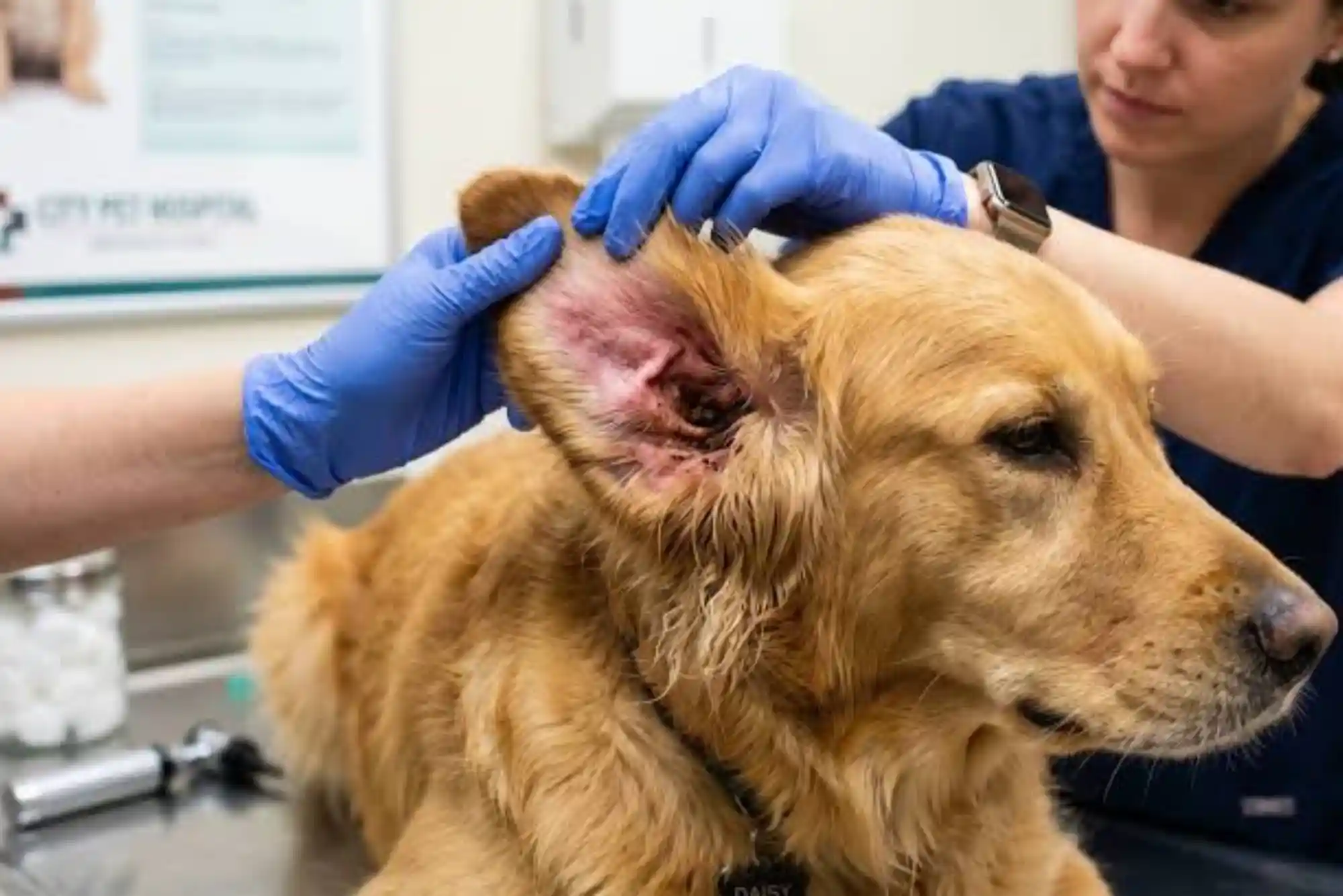
An inflamed ear may look noticeably red inside the flap or around the opening of the canal. Swelling can also make the ear canal narrower.
Chronic inflammation can eventually cause thickening and structural changes in the canal. This is one reason recurring ear problems should not simply be treated at home without finding the underlying cause.
Unusual odor
A strong or unpleasant smell is another common sign. The odor may be particularly noticeable when you gently inspect the outside of the ear.
However, smell alone cannot tell you whether an infection is caused by yeast or bacteria. Both can occur in diseased ears, and mixed infections are possible.
Discharge or excessive wax
You may notice brown, black, yellow, cream-colored, or otherwise abnormal material. The texture can range from waxy to moist or thick.
Dark debris is sometimes associated with yeast or parasites, but appearance alone is not diagnostic. Bacterial infections and mixed infections can also produce abnormal discharge. Veterinary examination and cytology provide much more reliable information.
Yeast vs Bacterial Dog Ear Infections
One of the most common questions owners ask is whether they can tell a yeast infection from a bacterial infection simply by looking at the ear.
The short answer is no.
There are patterns that veterinarians may consider, but the appearance of discharge is not enough to identify the organism. Dogs can also have yeast and bacterial overgrowth at the same time.
What a yeast ear infection may look like
Yeast infections commonly involve an organism called Malassezia pachydermatis. Small amounts of this yeast can normally live on canine skin, but changes in the ear environment can allow it to multiply excessively.
A yeast-associated ear problem may involve itching, redness, waxy debris, and a distinctive unpleasant or musty odor. Dogs with allergies or chronic skin problems may also experience recurrent yeast-related ear inflammation.
Still, these characteristics are clues rather than a diagnosis.
What a bacterial ear infection may look like
Bacterial infections can cause significant inflammation, pain, swelling, odor, and discharge. Some bacterial infections produce substantial exudate and can become particularly painful.
Certain bacteria, including Pseudomonas, can be challenging to treat and may be associated with chronic or severe disease. Veterinary testing can help determine what organisms are present and which treatment is appropriate.
Why the distinction matters
Yeast and bacteria respond to different medications. An antifungal medication targets yeast, while antibiotics target susceptible bacteria.
Using the wrong product can delay appropriate treatment. Some medications can also be unsafe if the eardrum is damaged. For that reason, veterinarians may examine the ear with an otoscope and test a sample of the discharge before choosing treatment.
Why Dogs Develop Ear Infections
An ear infection is not always an isolated problem. Sometimes yeast or bacteria are secondary to another condition that has changed the ear environment.
Allergies are a frequent underlying factor. Moisture, ear anatomy, foreign material, parasites, chronic inflammation, and other skin conditions can also contribute.
Dogs with large, floppy, or hairy ears may be more susceptible because ear structure can affect ventilation and moisture. However, any dog can develop otitis externa.
This is especially important when infections keep returning. Treating the organisms without addressing the underlying cause may provide temporary improvement while allowing the problem to come back.
Can You Clean a Dog’s Ears at Home?
Yes, but only when home cleaning is appropriate for your dog.
Routine ear care and cleaning an actively infected, painful ear are not the same thing. If the ear is severely swollen, painful, bleeding, or producing substantial discharge, a veterinarian should assess it before you attempt aggressive cleaning.
Your veterinarian can also recommend an appropriate ear-cleaning solution based on your dog’s condition.
Choose an appropriate ear cleaner
Avoid improvising with household ingredients. Veterinary references specifically caution against irritating home remedies, including vinegar mixtures, because they can worsen inflammation and secretions.
Products containing alcohol or hydrogen peroxide can also irritate inflamed or ulcerated ear canals. A veterinarian can help you select a cleaner suitable for your dog’s ears.
How to clean the ears gently
If your veterinarian has advised home cleaning, hold the ear flap gently upward and apply the recommended cleaner without forcing the bottle tip deep into the canal.
Massage the base of the ear gently so the solution can loosen material inside the canal. Your dog will probably shake its head afterward, which can help move loosened debris toward the opening.
Wipe away the material you can easily reach with cotton balls or gauze. Do not push cotton swabs down into the ear canal. Deep probing can push debris farther inside or injure delicate structures.
Don’t over-clean
More cleaning is not automatically better. Excessive cleaning can irritate the ear canal and may contribute to inflammation.
The appropriate frequency depends on the dog’s condition. Some dogs need periodic maintenance, while dogs being treated for an infection may temporarily require a different schedule under veterinary direction.
When Home Cleaning Is Not Enough
Home cleaning should not be used as a substitute for veterinary treatment when infection is suspected.
A veterinary appointment is particularly important when your dog has significant pain, marked swelling, persistent discharge, repeated infections, bleeding, or symptoms that do not improve.
A vet should also evaluate a dog showing balance problems, a head tilt, hearing changes, or unusual eye movements. These signs can indicate involvement of the middle or inner ear rather than a simple outer-ear problem.
Why the eardrum matters
The condition of the eardrum affects which cleaning products and medications are safe.
A veterinarian may need to examine the eardrum before certain products are used. If the eardrum is ruptured, some medications and cleaning agents can potentially cause complications, including damage to structures involved in hearing and balance.
This is one of the strongest reasons to avoid experimenting with leftover ear drops or human medications.
How Veterinarians Diagnose Dog Ear Infections
A proper diagnosis usually starts with a physical examination and inspection of the ear canal.
The veterinarian may use an otoscope to evaluate the canal and, when possible, the eardrum. A sample of ear discharge can then be examined under a microscope.
Cytology can reveal yeast, bacteria, inflammatory cells, and other clues. In difficult or recurring cases, additional testing such as culture or imaging may be necessary.
This approach is more useful than guessing based on discharge color.
How Dog Ear Infections Are Treated
Treatment depends on what is causing the inflammation and what testing reveals.
Yeast-associated infections may require topical antifungal treatment. Bacterial infections may require an appropriate antibacterial medication. Many veterinary ear products combine antimicrobial and anti-inflammatory ingredients because controlling swelling and inflammation is also important.
The underlying trigger must also be addressed. For example, a dog with allergies may continue developing ear infections unless the allergic disease is managed.
Treatment should be completed according to veterinary instructions. Stopping too soon because the ear looks better can contribute to recurrence, particularly in chronic cases. Veterinary rechecks may be recommended to confirm that the infection has actually cleared.
Preventing Future Ear Problems
Prevention starts with regular observation rather than constant cleaning.
Check your dog’s ears periodically for redness, unusual odor, moisture, excessive wax, discharge, or changes in sensitivity. Keeping the ears dry is particularly useful for dogs that swim frequently.
During bathing, prevent water from entering the ear canals. Dogs prone to recurring infections may benefit from a veterinarian-recommended maintenance cleaning routine.
Avoid routinely removing ear-canal hair unless your veterinarian recommends it for your individual dog. Excessive hair removal can itself trigger inflammation.
Recognize the Signs Early
Recognizing the signs of dog ear infections early can prevent a minor irritation from becoming a painful, recurring problem. Head shaking, scratching, redness, odor, discharge, and sensitivity are important warning signs, but they cannot reliably distinguish yeast from bacteria.
The safest approach is to avoid guessing from ear appearance alone. A veterinary examination and microscopic evaluation can identify what is happening and help determine the appropriate treatment. Gentle, veterinarian-approved home cleaning can support ear health, while aggressive cleaning and homemade remedies can make inflammation worse.
FAQs
How can I tell if my dog has a yeast or bacterial ear infection?
You usually cannot tell reliably at home. Yeast and bacterial infections can cause overlapping symptoms such as odor, redness, itching, discharge, and head shaking. A veterinarian can examine an ear sample under a microscope to identify the organisms involved.
What does a yeast infection in a dog’s ear look like?
A yeast-associated ear infection can cause itching, redness, odor, and abnormal waxy or dark discharge. However, these signs are not specific enough to confirm yeast because bacterial and mixed infections can produce similar changes.
What does a bacterial ear infection look like in dogs?
Bacterial infections may cause redness, swelling, pain, foul odor, head shaking, scratching, and discharge. Some infections can become severe and produce substantial inflammation or exudate. Veterinary testing is needed to identify the specific organism and guide treatment.
Can I clean my dog’s infected ear at home?
Sometimes, but your veterinarian should determine whether home cleaning is appropriate. Painful, severely swollen, bleeding, or heavily infected ears may need professional examination and cleaning. Use only a cleaner recommended for your dog and avoid inserting cotton swabs deep into the canal.
What can I use to clean my dog’s ears at home?
Use a veterinary-recommended ear-cleaning solution rather than household remedies. Alcohol, hydrogen peroxide, vinegar mixtures, and other irritating substances can worsen an inflamed ear. Your veterinarian can recommend the safest product for your dog’s condition.
How often should I clean my dog’s ears?
There is no single schedule for every dog. Some dogs need occasional maintenance cleaning, while dogs with recurring ear problems may require a veterinarian-directed routine. Over-cleaning can irritate the ear, so follow your veterinarian’s instructions.
When should I take my dog to the vet for an ear infection?
Seek veterinary care when your dog has significant pain, persistent odor or discharge, swelling, bleeding, recurring infections, or symptoms that are getting worse. A head tilt, loss of balance, unusual eye movements, or hearing changes warrant prompt veterinary attention because deeper ear involvement may be present.