
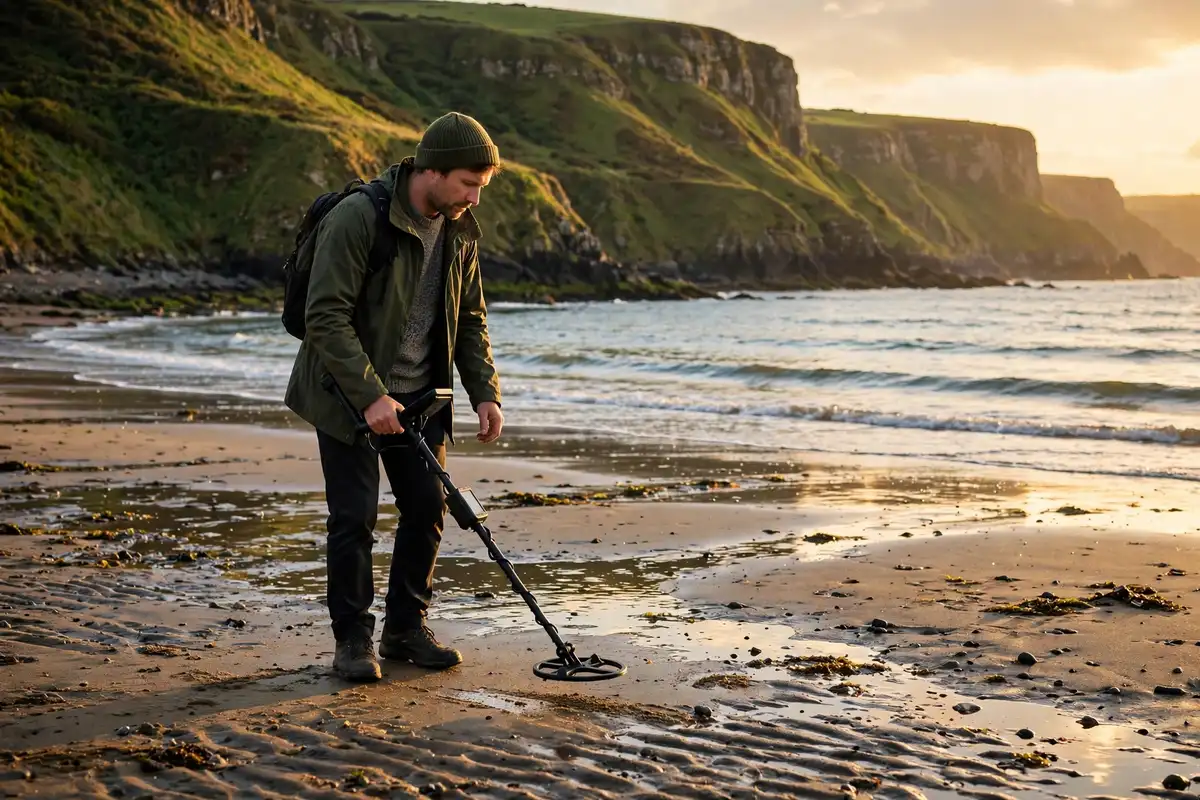
Metal detecting in the UK is one of those hobbies that sounds simple until you try it. You switch on a machine, sweep it over the ground, and wait for a beep. But behind that beep sits a mix of history, law, patience, and a fair amount of walking. Done right, it is a relaxing way to spend a weekend outdoors, and every now and then it turns up something genuinely old.
This guide covers what a beginner needs to know before the first hunt: the law, the gear, where to search, and how to handle what you find. No experience is needed. You only need permission, a basic detector, and a willingness to dig small holes and fill them in again.
Is Metal Detecting in the UK Legal?
Yes, metal detecting is legal in the UK, but only with permission and only in the right places. The landowner’s permission comes first. In England and Wales, everything in the ground belongs to the landowner, so detecting on farmland, a garden, or private land without asking is trespass, and keeping finds without permission can be theft. Always ask first, and get the answer in writing if you can.
Some land is off limits entirely. You must not detect on scheduled monuments, protected archaeological sites, or Sites of Special Scientific Interest without specific consent. The Treasure Act 1996 sets out what counts as treasure, and finds that qualify must be reported to the local coroner within 14 days. That sounds formal, but in practice most detectorists report through their local Finds Liaison Officer, who records the find and guides you through the process.
Beaches are the easiest place to start. Most beaches in England, Wales, and Northern Ireland sit on Crown Estate foreshore, and the Crown Estate issues a free permit for recreational detecting between the low and high water marks. Scotland has its own rules, so check before you travel. Even with a permit, some beaches are restricted, so look for local notices before you start sweeping.
What Gear Do You Actually Need to Start?
A beginner does not need the most expensive machine on the shelf. A mid-range starter detector with preset modes for coins, jewellery, and relics will handle most UK ground. Learning what makes a good metal detector stand out from a cheap one will save you money, because the cheapest machines often struggle with mineralised soil and false signals.
Beyond the detector itself, four items matter. A handheld pinpointer helps you find a small object inside a hole without widening it. A narrow digging spade cuts a clean plug of turf that you can put back. A finds pouch keeps coins and buttons safe. Headphones help you hear faint signals on a windy beach. That is the whole starter kit, and it fits in a small bag.
Buy second hand if your budget is tight. Detectorists upgrade often, so good used machines appear regularly, and a used mid-range detector will outperform a new budget one. Test it on a garden or a friend’s field before you commit to a full day out.
Where Can Beginners Detect?
Farmland is where most UK finds come from, because fields have been walked, worked, and dropped on for centuries. Farmers are often happy to grant permission if you ask politely, explain what you do, and offer to share interesting finds or report anything important. Offer to fill every hole properly and to keep gates as you found them. A good first impression can lead to a regular permission.
Beaches suit beginners because the ground is easy to dig and the targets are modern: coins, rings, and the occasional old button. Woodland edges and old footpaths can also be productive, but check ownership first, as woods are often private. Public parks are usually a no, because most councils ban detecting there.
Detecting rallies are the best shortcut for a beginner. Clubs and rally organisers arrange permissions on farmland, and you pay a small fee to detect alongside experienced people for a day. You learn the etiquette, see different machines in action, and get help identifying your finds. Search online for a club near you and join one before buying anything expensive.
Your First Five Hunts: A Simple Plan
Start small and build up. Here is a plan that works for most beginners.
- Hunt one: your garden or a friend’s garden. Bury a few coins at different depths and learn what your machine sounds like. This teaches you the tones before you are in the field.
- Hunt two: a local beach at low tide. Sweep slowly in straight lines and dig every clear signal. You will find modern coins fast, which builds confidence.
- Hunt three: a rally or club dig. Watch how experienced detectorists swing, dig, and record. Ask questions. Most are happy to help.
- Hunt four: a permission field, one corner only. Grid a small area and work it properly instead of wandering. Slow, overlapping sweeps find more than fast ones.
- Hunt five: return to the same field. Different ground conditions and a lower sensitivity setting will reveal targets you walked past the first time.
Keep a simple notebook from the start. Note the date, the place, the settings you used, and what you found. It sounds dull, but it is how you learn which fields reward a second visit and which settings suit your machine.
What to Do When You Find Something
Most finds are ordinary: buttons, buckles, modern coins, and bits of farm machinery. Record them anyway. Take a photo, note where you found them, and keep them in labelled bags. If something looks old or unusual, show it to your local Finds Liaison Officer. They work for the Portable Antiquities Scheme and record finds voluntarily, which helps archaeologists build a picture of the past.
Take a typical first hunt on a Norfolk beach. A beginner sweeps the wet sand at low tide, gets a strong mid-tone signal, and digs up a silver sixpence from the 1950s. It is worth very little, but it is the first old coin they have ever held, and it teaches them what silver sounds like on their machine. That one find is worth more than a pocket full of modern coins, because it trains the ear.
If you find something that could be treasure, such as a hoard of coins or a gold object more than 300 years old, stop and report it. The coroner process is straightforward, and museums can acquire treasure items at a fair market value, with the reward shared between finder and landowner. Reporting is part of the hobby, not a punishment for it.
Common Beginner Mistakes to Avoid
The first mistake is swinging too fast. A detector needs time to read the ground, so keep the coil low and move it slowly, overlapping each sweep by half. The second is digging every signal. Iron gives a grunt on most machines, and learning to ignore obvious iron saves your back and your day.
The third mistake is leaving holes. Always cut a neat plug, put the soil back, and press the turf down. Landowners notice bad digging, and one careless visit can close a permission for everyone. The fourth is detecting without permission. It is the fastest way to lose access to land and to give the hobby a bad name.
Your First Hunt Starts Here
Metal detecting rewards patience more than spending. A modest machine, a beach permit, and a few hours of slow sweeping will teach you more than any buying guide. Ask a farmer, join a club, and keep a notebook. The finds will come, and when they do, you will know exactly what to do with them. If you are making a weekend of it, London has plenty to fill the rest of the day, from a hop-on hop-off bus tour to the Harry Potter Studio Tour, and the countryside is full of outdoor hobbies like cycling to pair with a morning’s detecting. Like getting active outdoors, detecting is a hobby that gets better the more often you do it.