
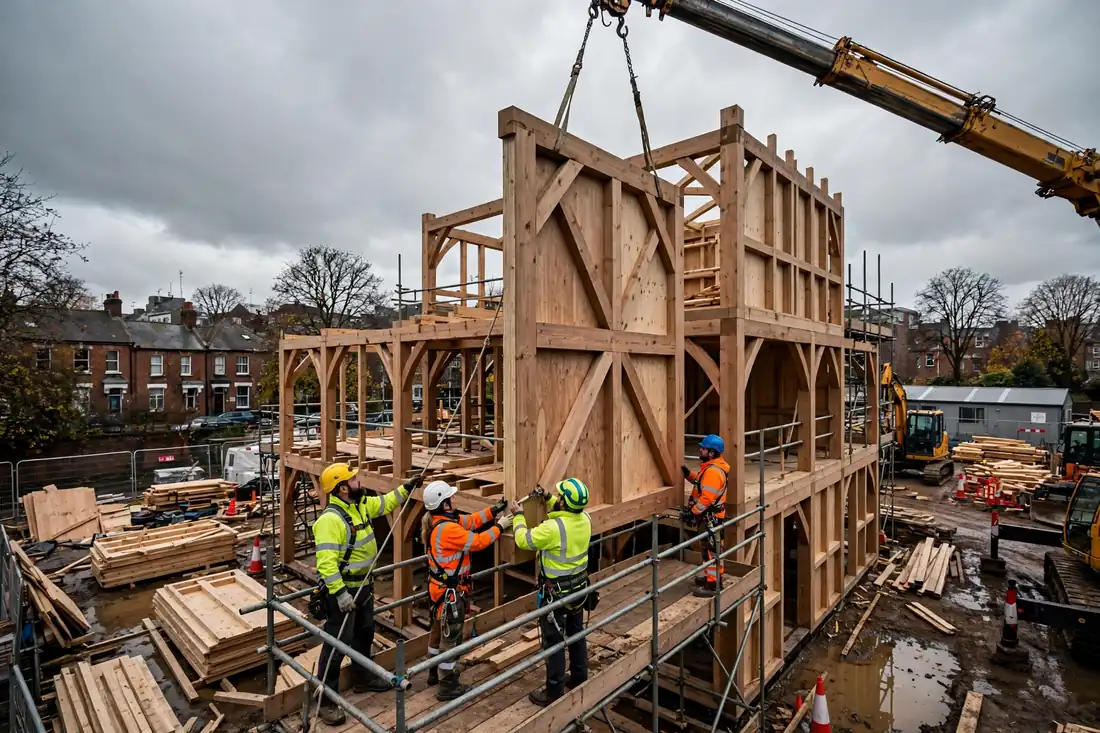
Construction is one of Britain’s largest industries and one of its largest emitters, which makes it central to any serious climate plan. The good news is that innovations in sustainable construction are flourishing in the UK, from mass timber towers and modular factories to cement made with captured carbon and buildings designed to be taken apart rather than demolished. This article explores where Britain’s leading edge lies, what is driving it, and the obstacles between promising pilots and everyday practice.
Why Construction Had to Change
The built environment accounts for a substantial share of UK emissions, both from operating buildings, heating, cooling and lighting them, and from the embodied carbon in materials such as concrete and steel. For decades, regulation focused on operational energy; the frontier now is whole-life carbon, counting a building’s footprint from quarry to demolition.
That shift explains the energy behind innovations in sustainable construction in the UK. Clients, especially public bodies and large developers, increasingly ask for carbon assessments at design stage, and planning policy in places such as London now requires them. What gets measured gets managed, as our property and development coverage has observed across recent major projects.
Materials: Timber, Reuse and Low-Carbon Concrete
The most visible innovation is structural. Engineered timber, cross-laminated and glulam, allows tall buildings to be built largely from wood that stores carbon rather than emitting it, and British projects have been among the world’s tallest timber structures. Timber construction is faster and quieter on site, and its warmth is changing what commercial buildings feel like.
Alongside new materials comes an old idea made systematic: reuse. Steel beams, raised floors, bricks and even entire facades are now salvaged, certified and reused through material exchanges, with “materials passports” recording what a building contains for its future dismantlers. Concrete, the industry’s biggest challenge, is being reformulated with cement substitutes such as ground granulated blast-furnace slag and calcined clay, cutting its footprint substantially. Our design and architecture features profile the projects proving these approaches at scale.
Building in Factories: The Modular Method
Modern methods of construction, above all modular building, promise factory precision in an industry famous for weather delays and waste. Homes, hotel rooms, student residences and hospital wards are manufactured as volumetric units or panels, then assembled on site in days. Factory conditions mean less waste, better insulation fitting and safer work, and the approach suits Britain’s urgent need for housing volume.
The sector has had business failures as well as successes, a reminder that innovation needs patient finance and steady order books. Where councils and housing associations commit to pipelines of work, factories thrive. Our housing coverage examines where modular is delivering and where it still struggles.
Retrofit: The Biggest Job of All
Most buildings that will stand in 2050 already exist, many of them draughty. The largest of all sustainable construction challenges in the UK is retrofit: insulating walls, floors and roofs, upgrading windows, and replacing gas boilers with heat pumps and district heat across millions of homes. Done street by street, retrofit cuts bills, improves health and creates local jobs that cannot be offshored.
The barriers are cost, skills and disruption, and policy has swung between schemes. What works best, evidence suggests, is area-based delivery with trusted local installers and honest advice for householders. Homeowners planning improvements can find starting points in our home guides to energy and renovation.
Digital Tools and Smarter Sites
Technology is quietly transforming practice. Building information modelling lets teams clash-check designs before anyone reaches site, drones and sensors monitor progress and safety, and carbon calculators are built into design software so architects see the footprint of every choice in real time. On site, electrified plant, better logistics and waste segregation are becoming normal expectations on major projects.
These tools matter because sustainable construction is ultimately about information: knowing what a building is made of, how it performs and how it can be adapted. The UK’s research base in this area, in universities and specialist firms, is strong, as our technology features report.
Skills, Standards and the People Who Build
None of this happens without people. Sustainable construction needs heat pump installers, retrofit coordinators, timber engineers and assessors in numbers the training system is racing to supply. Colleges and private providers have expanded courses, and major contractors run academies to upskill their own workforces, because the scarcest resource on a modern site is often not material but expertise.
Standards are tightening in parallel. Building regulations have lifted energy standards for new homes, with the Future Homes Standard intended to make gas boilers obsolete in new builds, and whole-life carbon assessment is moving from voluntary best practice towards expectation on major projects. Each tightening resets what “normal” means, which is precisely how leading edges become standard practice.
There is also a cultural shift worth noting. A generation of architects, engineers and site workers entered the industry wanting to build differently, and they are now senior enough to specify, approve and deliver the projects described here. Culture, in the end, is what turns pilots into habits.
From Leading Edge to Standard Practice
Britain’s challenge is diffusion. The best projects here match any in the world, but average practice lags, held back by skills shortages, risk-averse procurement and the upfront cost of greener options even where lifetime costs are lower. Training the retrofit and timber workforce the country needs is as important as any single technology.
Innovations in sustainable construction have given the UK a genuine leading edge. Turning that edge into the ordinary way Britain builds, warmer homes, lower bills, buildings made to be remade, is the work of the next decade, and it is well under way.