
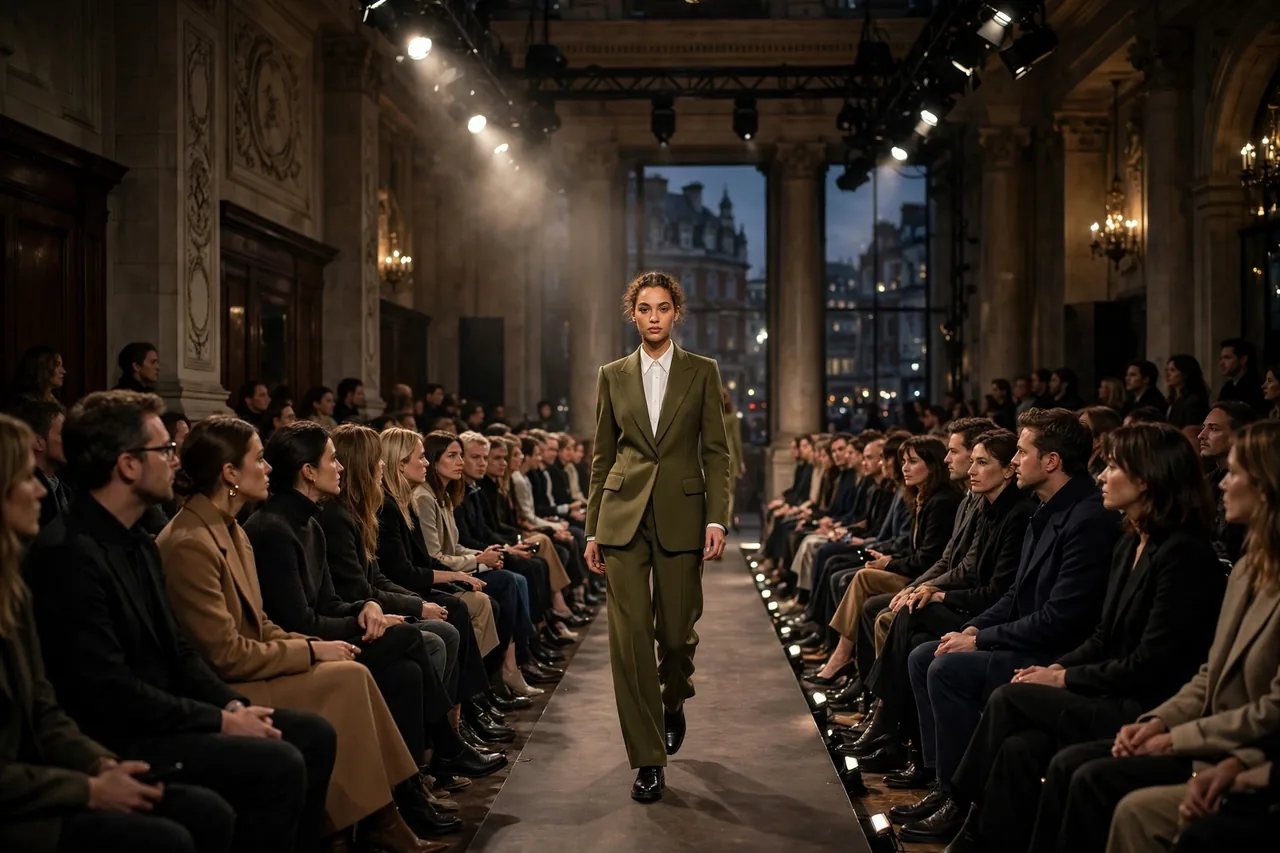
Twice a year, the world’s fashion press descends on the capital, and London Fashion Week trends ripple outwards into high streets, offices and wardrobes across the country. London has always been the rebellious sibling of the fashion capitals: less polished than Paris, less commercial than New York, and proud of it. Its shows are where street style meets serious tailoring, and where young designers take risks the industry later adopts. This article picks out the highlights of recent seasons and the London Fashion Week trends that are genuinely shaping what Britain wears.
Tailoring with a Twist
The strongest of the recent London Fashion Week trends is the reinvention of tailoring. British designers keep returning to the suit, our great sartorial invention, and pulling it apart: oversized blazers worn as dresses, deconstructed jackets with exposed construction, trousers cut wide and worn with trainers. The message is that formality is a playground, not a rulebook, and it translates beautifully to real wardrobes, where a single strong blazer updates everything from jeans to evening dresses.
Menswear has followed the same path, with relaxed silhouettes replacing the skinny fits of the last decade and traditional fabrics, tweeds, checks and flannels, cut into contemporary shapes. Our fashion coverage follows how these runway ideas filter into everyday British style.
Heritage Fabrics and British Craft
London shows have leaned proudly into British textile heritage. Tartan and Prince of Wales check appear season after season, alongside Harris tweed, waxed cotton and knitted Fair Isle patterns, often produced by historic mills whose survival depends on this fashion attention. Designers are increasingly transparent about sourcing, naming the mills and makers in their show notes.
This craft emphasis connects fashion to the wider revival of British making that we celebrate in our features on traditional crafts and textiles. When a coat’s cloth can be traced to a specific island mill, the garment carries a story fast fashion cannot imitate.
Colour Stories: From Gallery Neutrals to Joyful Brights
Colour at London Fashion Week tends to swing between two poles. One is the gallery palette of black, white, camel and grey that underpins so much British dressing. The other is joyful, almost defiant brightness: saturated reds, cobalt, acid green and fuchsia, worn head to toe. Recent seasons have shown both, sometimes in the same collection, reflecting a city that dresses for boardrooms and warehouse parties in the same week.
For real life, the lesson is proportion: one vivid piece against a calm base, or a bright accessory against a dark outfit, delivers the energy without the costume. Our style guides show how readers adapt these colour stories for work and weekends.
Sustainability Moves from Slogan to Structure
The most consequential of the London Fashion Week trends is not a silhouette but a system. The British Fashion Council has pushed sustainability requirements for showcasing brands, deadstock fabrics and upcycled garments appear on major runways, and rental, resale and repair businesses now launch alongside the shows. London’s young designers, raised on climate anxiety, treat waste as a design flaw rather than an inevitability.
Progress is uneven and greenwashing exists, but the direction is clear: transparency about materials and making is becoming a condition of credibility for new labels. That shift mirrors consumer behaviour across Britain, where our lifestyle features on conscious shopping report growing demand for clothes built to last.
Street Style: The Other Catwalk
Half the influence of London Fashion Week now happens outside the venues. The city’s guests, students, stylists, photographers and passers-by, create a street style scene that brands study as closely as the shows. Its signatures are eclecticism and wit: vintage mixed with designer, sportswear with tailoring, charity shop finds elevated by confidence.
This democratic energy is London’s gift to global fashion. Trends here are not dictated from above; they bubble up from markets, campuses and club nights. Following the street photographers is often the fastest way to see next season’s high street taking shape, a phenomenon our culture coverage documents each season.
The Designers to Watch
London’s ecosystem depends on renewal, and its support structures are part of the story. The British Fashion Council’s NEWGEN scheme has launched generations of designers who went on to dress the world, providing show space, mentoring and business advice at the moment young labels are most fragile. Central Saint Martins and the Royal College of Art continue to supply the industry with graduates whose final collections are scouted like football talent.
The current crop works differently from their predecessors: many launch direct-to-customer, build audiences on social media before their first show, and treat collaboration, with musicians, artists and high street brands, as a core strategy rather than a sell-out. Watching their first collections is the closest thing fashion has to reading next year’s headlines today.
Established houses matter too. The creative directorships of Britain’s heritage brands rotate through London’s talent, and each appointment resets the conversation about what British luxury looks like, another way the capital’s ideas travel the world.
What It All Means for Your Wardrobe
You do not need a front-row seat to use London Fashion Week well. Take the ideas, not the outfits: invest in one piece of strong tailoring, let heritage fabrics add texture, use colour deliberately, and buy fewer, better things from makers you can name. Watch what the young designers do with proportion and cloth, and adapt it to your own life and budget.
London Fashion Week trends matter because London dresses the world in ideas before it dresses it in clothes. This season’s message, creativity with conscience, cut with confidence, is one any wardrobe can wear.


