
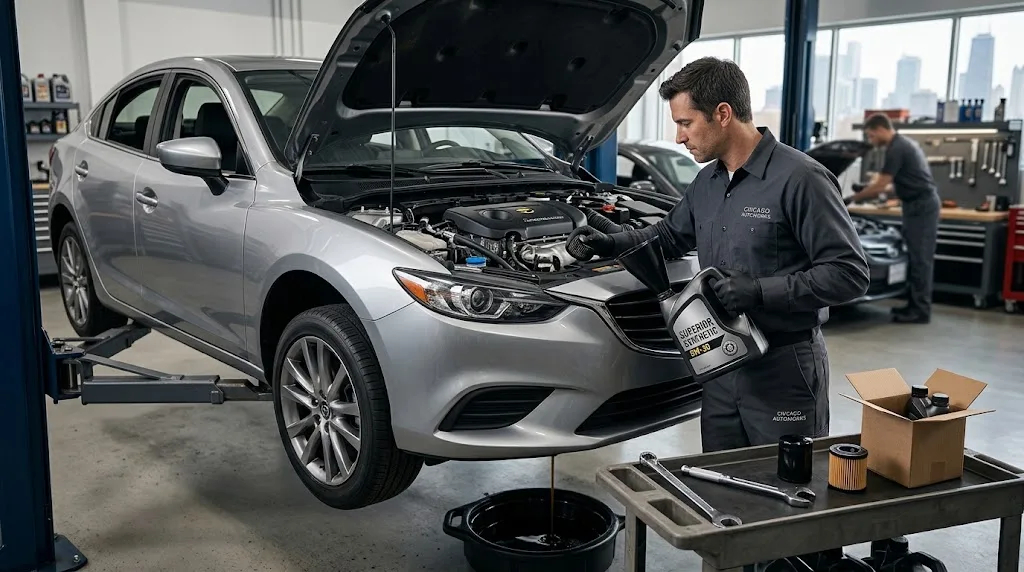
The internal combustion engine is a high-precision mechanical system operating under extreme thermal and mechanical stresses. Within the engine block, components like pistons, crankshaft bearings, camshaft lobes, and variable valve timing (VVT) actuators move at high speeds with clearances measured in thousandths of a millimeter. The primary defense against friction, wear, and destructive heat build-up is hydrodynamic lubrication provided by engine oil.
A modern oil service is far more than a routine fluid drain and top-off. It is a critical chemical and mechanical reset designed to preserve internal engine tolerances, maintain hydraulic oil pressure for timing chain tensioners, and prevent the accumulation of harmful carbon sludge. In harsh urban environments like Chicago, frequent short trips, severe temperature drops, and stop-and-go driving accelerate oil degradation, making adherence to precise oil service protocols essential for long-term engine survival.
Below is an inside look at the tribological principles of motor oil, the mechanics of oil filtration, and why technical precision matters during routine oil service.
1. Viscosity Dynamics and Synthetic Base Stocks
Engine oil performs four primary functions: lubricating moving parts, absorbing combustion heat, sealing piston rings against power blow-by, and suspending microscopic debris. Understanding how oil degrades requires analyzing its physical chemistry:
- Viscosity Index and Thermal Shear: Modern engines require ultra-low viscosity synthetic oils (such as 0W-20 or 0W-16) to maximize fuel efficiency and flow instantly to overhead camshafts during cold starts. As oil undergoes repeated thermal cycling and mechanical shear forces, polymer viscosity index improvers break down, causing the oil to thin out excessively at operating temperatures.
- Fuel Dilution and Sludge Formation: Short-distance driving prevents the engine from reaching full operating temperature. Unburned fuel and moisture vapor pass by the piston rings, condensing in the oil pan. This fuel dilution lowers fluid flashpoints and reacts with blow-by gases to form thick black sludge that clogs narrow oil pickup screens and VVT solenoids.
- Full Synthetic vs. Conventional Base Oils: Full synthetic lubricants utilize uniform, engineered molecular structures (Group III and Group IV base stocks) that offer superior oxidation resistance, lower volatility, and stable film strength under high-load conditions compared to conventional mineral oils.
2. Technical Oil Change Protocol and Filtration Mechanics
Executing a professional oil service requires strict adherence to manufacturer specifications regarding fluid specs, torque values, and filter media quality.
A thorough technical oil service follows four key stages:

- Complete Thermal Drain and Sump Inspection: Oil is drained while at operating temperature to ensure heavy suspended carbon particles flow out freely. The drain plug magnet and pan area are inspected for metallic debris, which can indicate premature bearing or timing chain guide wear.
- Filter Media and Anti-Drainback Valve Verification: The oil filter must capture particulates down to 20 microns without restricting flow. Quality filters feature synthetic media and silicone anti-drainback valves that retain oil in the top of the engine when shut off, preventing dry metal-on-metal starts.
- Crush Washer and Torque Specification: Over-tightening drain plugs strips aluminum oil pan threads, while reusing old crush washers causes slow oil leaks. Technicians install a new crush washer or O-ring and torque the drain plug strictly to factory foot-pound specifications.
- Exact Fluid Specification and Level Calibration: Engine oil is refilled strictly using factory-approved OEM oil specifications (such as dexos, VW 508.00, or BMW Longlife). Fluid levels are verified via dipstick or calibrated electronic oil level sensors after running the engine to pressure.
3. Digital Inspection Proof and Service Transparency
A primary point of uncertainty for vehicle owners during routine maintenance is verifying whether the correct oil specification was used and whether secondary wear items require attention.
To ensure total operational transparency, advanced service facilities—including the certified technical team performing an oil change in Chicago—integrate digital inspection reporting directly into every service:
- Fluid Spec and Quantity Logging: Digital receipts explicitly state the exact synthetic oil viscosity, manufacturer specification approval, and fluid volume injected into the engine.
- Digital Inspection Proof: Service reports include high-resolution photos of air and cabin filters, battery health test printouts, and digital tire tread depth measurements taken during the service.
- Maintenance Light and System Resets: Technicians reset the vehicle’s internal oil life monitor and recalibrate service interval reminders inside the central iDrive, MBUX, or ECU system.
Proactive engine oil care is the single most vital maintenance procedure for preventing catastrophic internal engine wear and preserving fuel economy. By combining advanced synthetic fluid chemistry with high-efficiency filtration, precise torque standards, and transparent digital service logs, modern automotive facilities ensure every engine continues to deliver peak performance and long-term reliability.